|
||||||||
|
|
||||||||
|
|
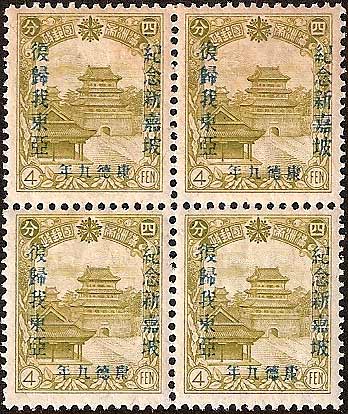
Postage Stamps Manchukuo Year 9 康德 Kāngdé Overprint Announcing The Fall of Singapore 16 February 1942. This overprint announces the fall of Singapore to the Japanese armed forces on 15th February 1942 this is considered one of the greatest defeats in the history of the British Army. The stamps, overprinted typographically, were the 2f (in red) and 4f (in blue) of the 1936 Fourth Regular Issue by the Manchukuo Postal Administration Office, Hsinking. A presentation booklet exists for this issue. Any "specimen" stamps or sheets you may see for this issue are fakes. The overprint consisted of two vertical and one horizontal row of characters.
|
|||||||
|
|
||||||||
|
1,000,000 1,000,000 |
||||||||
|
|
||||||||
|
Click Here to see Errors and Overprint Varieties |
||||||||
|
|
||||||||
|
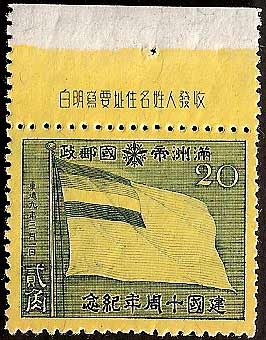
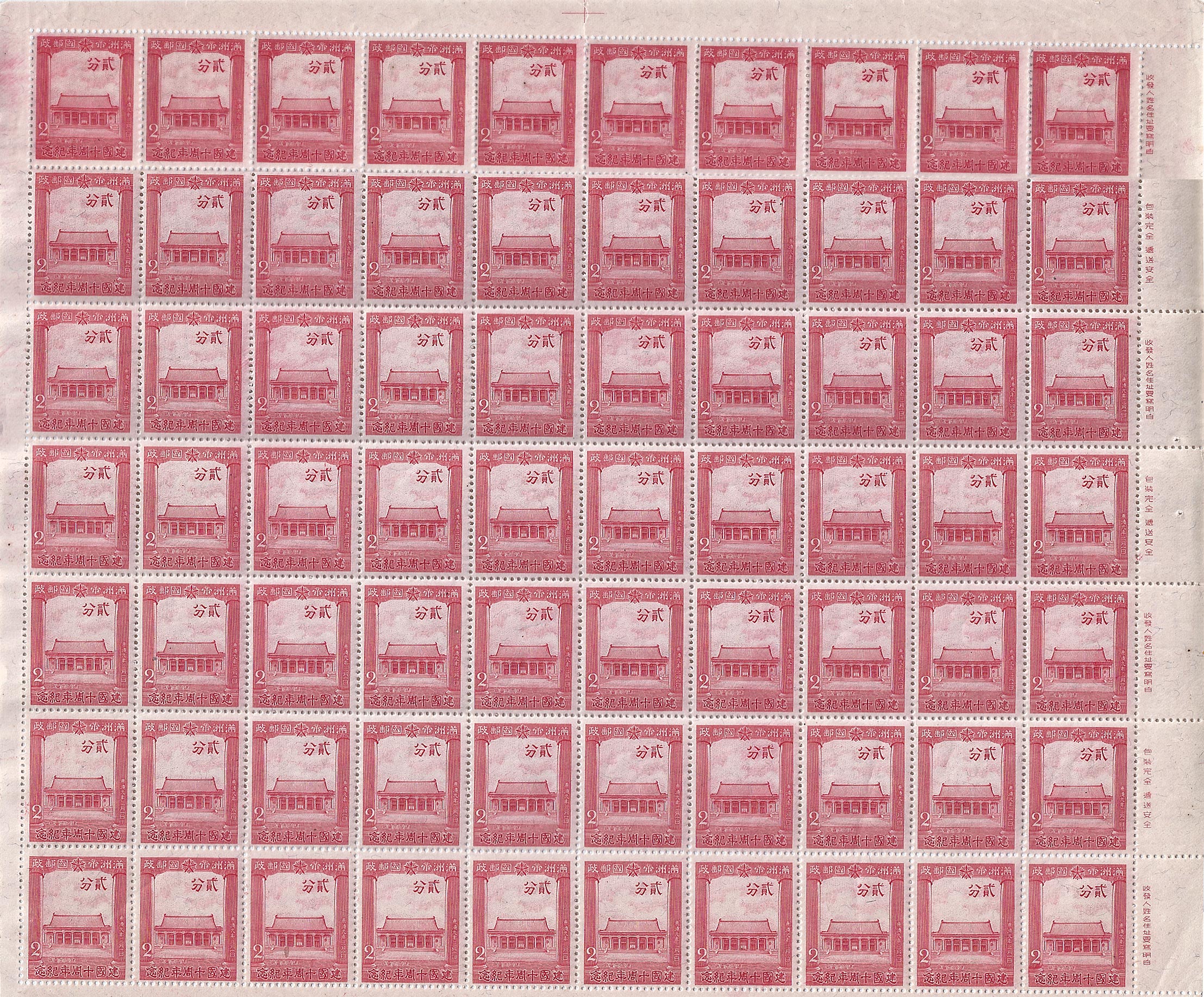
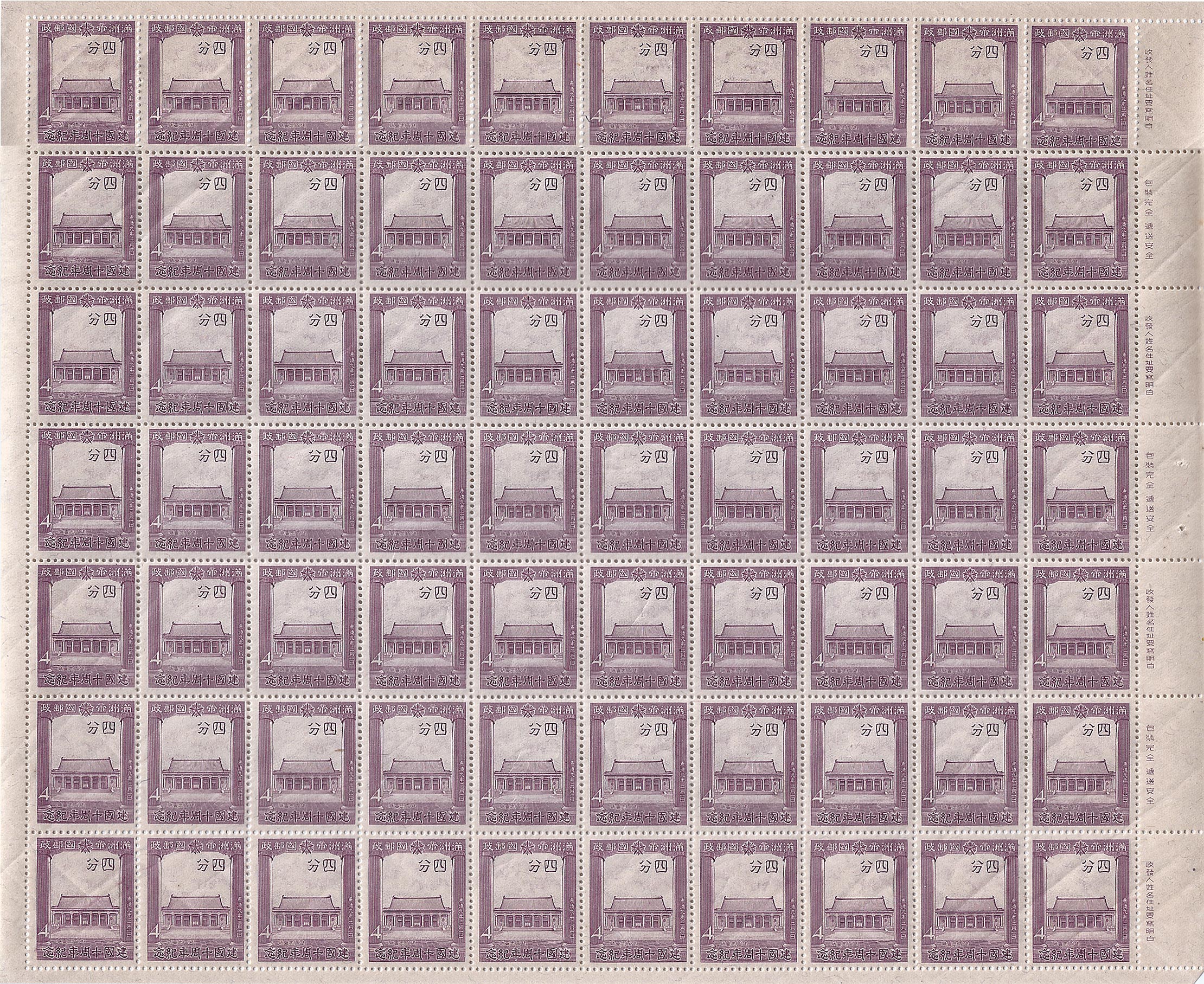
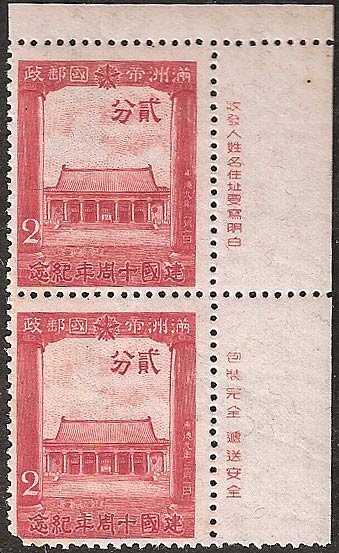
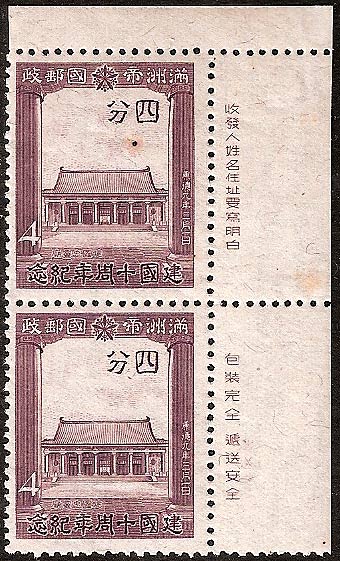
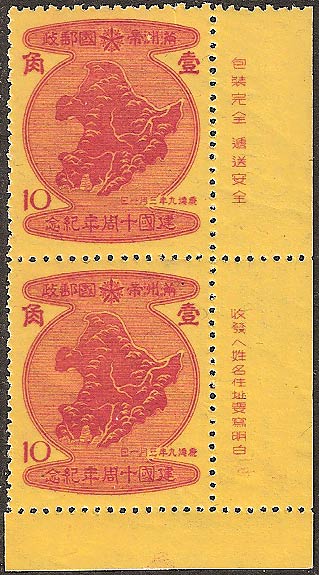
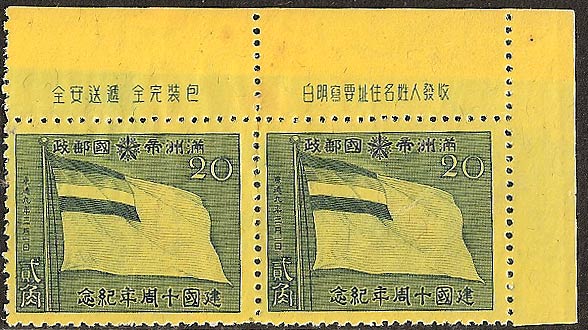
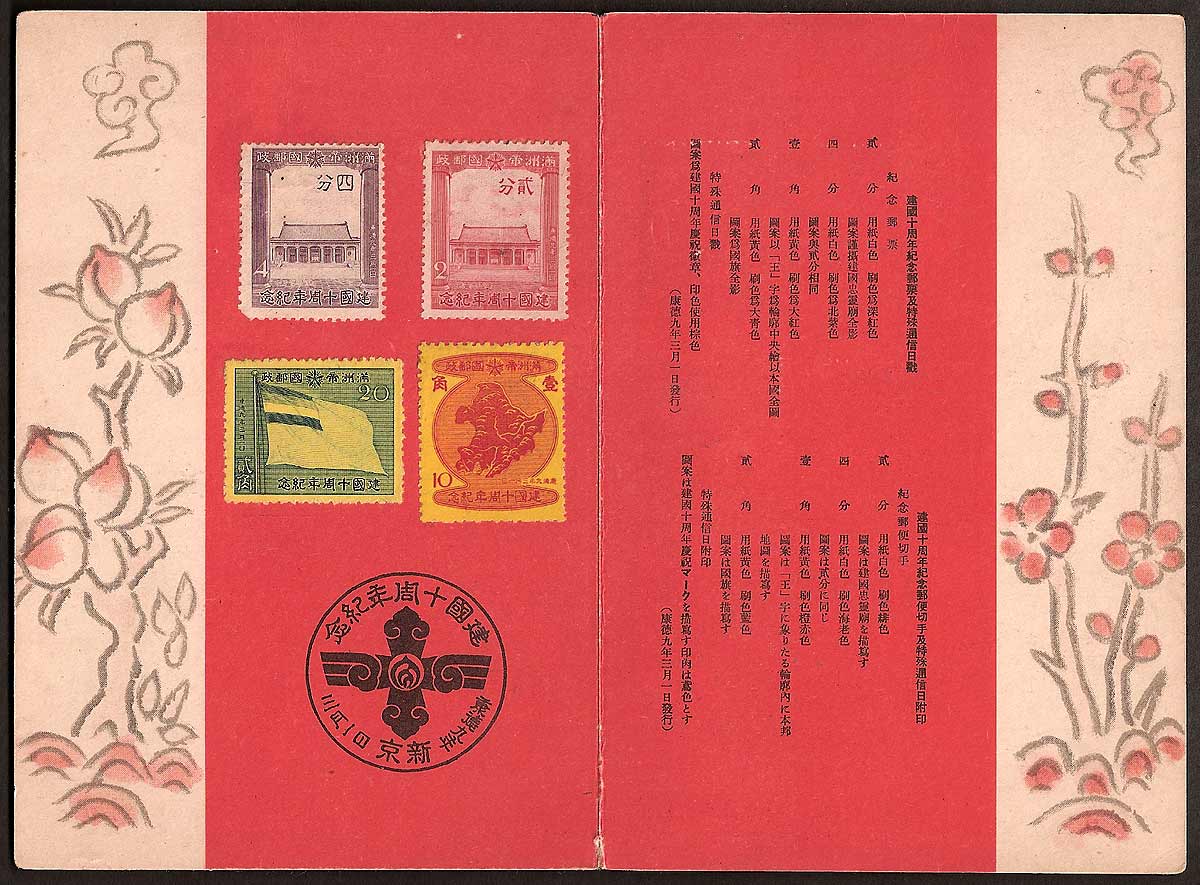
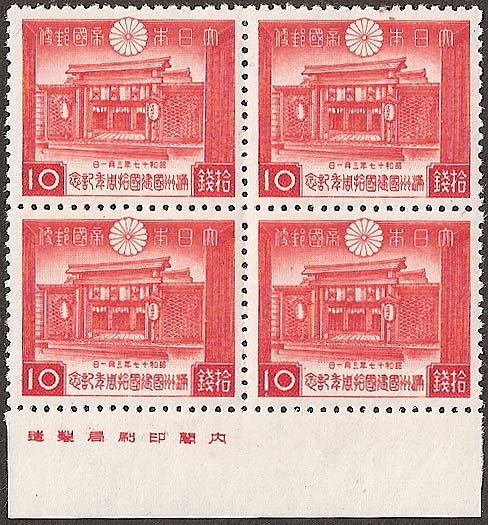
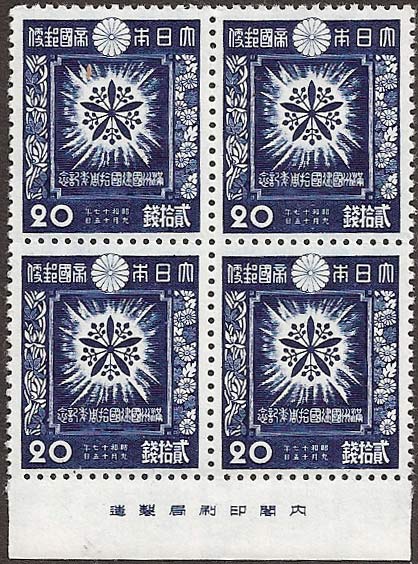
10th Anniversary of the Founding of Manchukuo First Commemorative Issue 1st March 1942. This is a set of four stamps recess printed on watermarked (see below) "granite" paper by the Manchukuo Postal Administration Office, Hsinking. Designs 2f and 4f Yutaka Yoshida; 10f Hirozo Oya and 20f Yoai Ohta. Note - copies of the 2f are said to exist that are offset printed, the printing appears sharper and more legible. Both the 10f and 20f appear to have been printed on yellow paper but, in fact, the paper is white with a yellow ground applied by litho prior to the design (see an example here). A presentation booklet exists for this issue (see below) and at the same time the Post Office produced two official postcards and these can be seen here. The stamps had two slogans these appeared on the right margin of values 2f, 4f and 10f, and on the top margin of the 20f. These instructed "write clearly the name and address of sender and recipient" and, "wrap perfectly so things go through the mail safely".
Printed by the Manchukuo Government Printing Office. 2f & 4f design
the Kenkoku Shrine, Hsinking 22.5mm x 28.5mm, sheets of 70, Perf 12 x 12½.
|
||||||||
|
|
||||||||
|
|
||||||||
|
1,050,000 1,150,000 |
||||||||
|
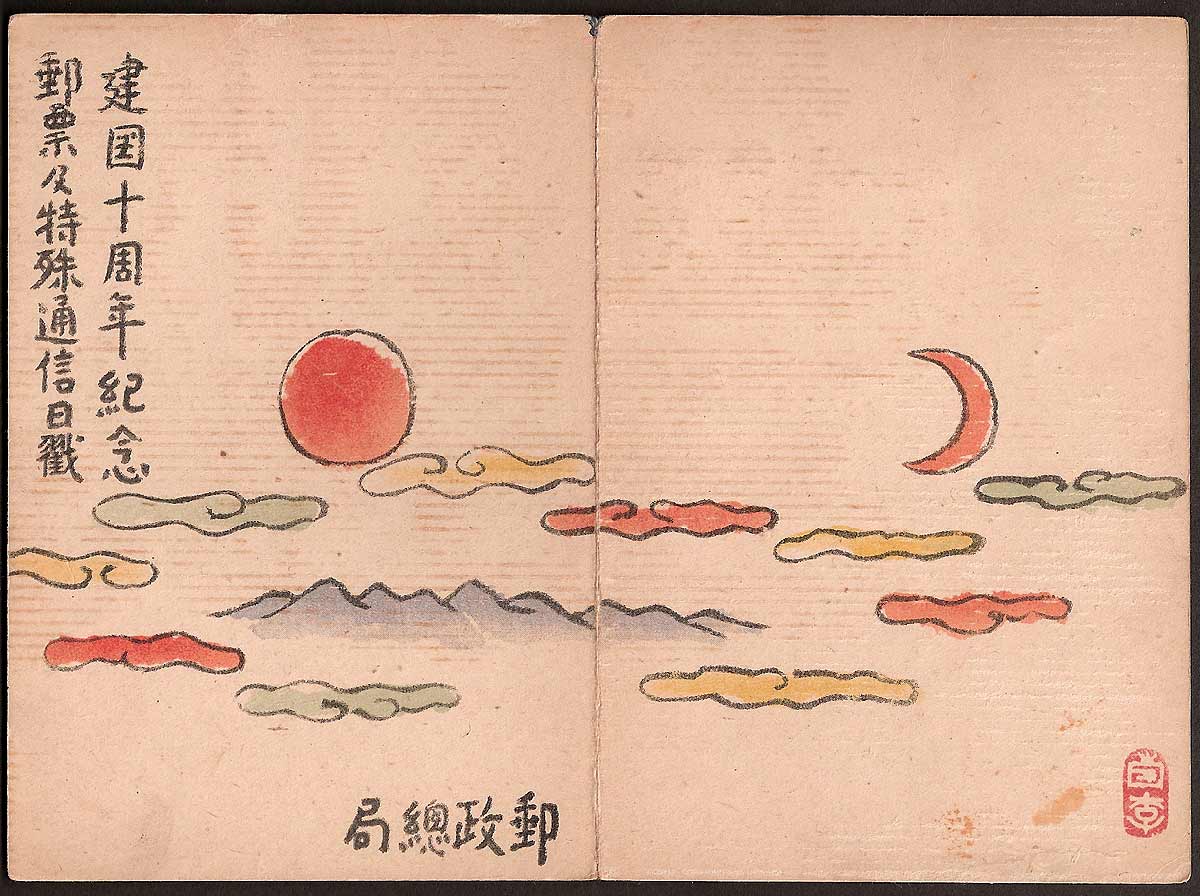
Cover and Contents of Special Presentation Booklet. The cover above looks like it has been specially hand coloured, however this is not the case and all are identical.
Zirkle
60
- Issued 1st March
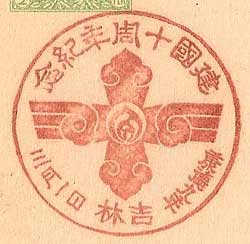
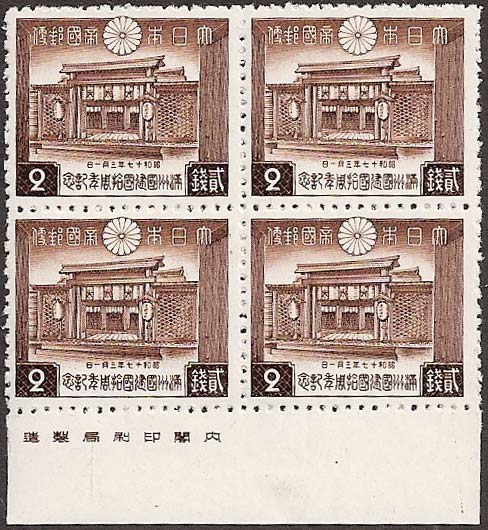
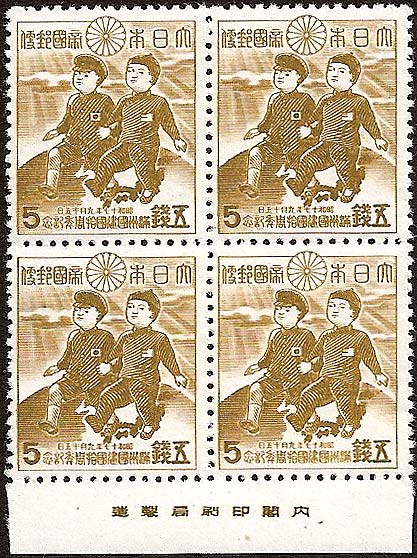
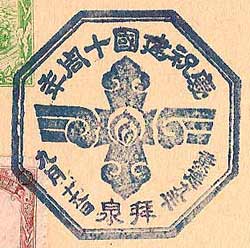
1942. Issued on the 10th anniversary, this is the first in this commemorative series. During 1942 Manchukuo produced 17 special cancels, more than any other year. Ten of the cancels issued in 1942 were connected to events associated with the 10th Anniversary of the Founding of the State and have the special cross shaped emblem (the cross is the shape of the simplified Chinese character meaning 10). What seems remarkable is that this emblem did not appear on any stamps. Japan also created a set of stamps to celebrate the 10th Anniversary of Manchukuo
|
||||||||
|
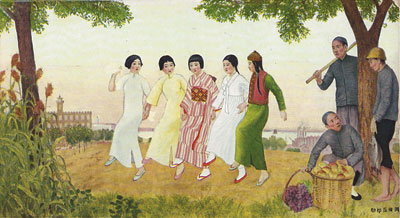
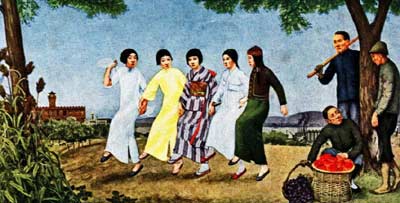
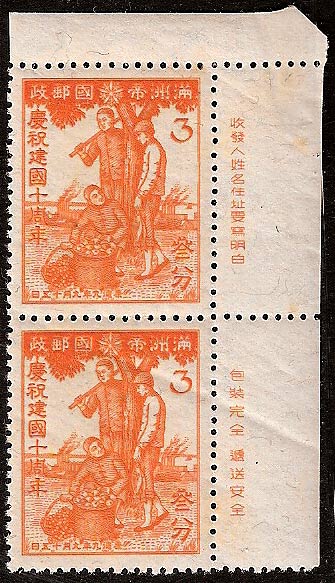
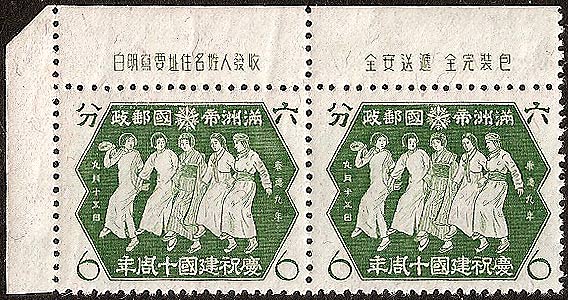
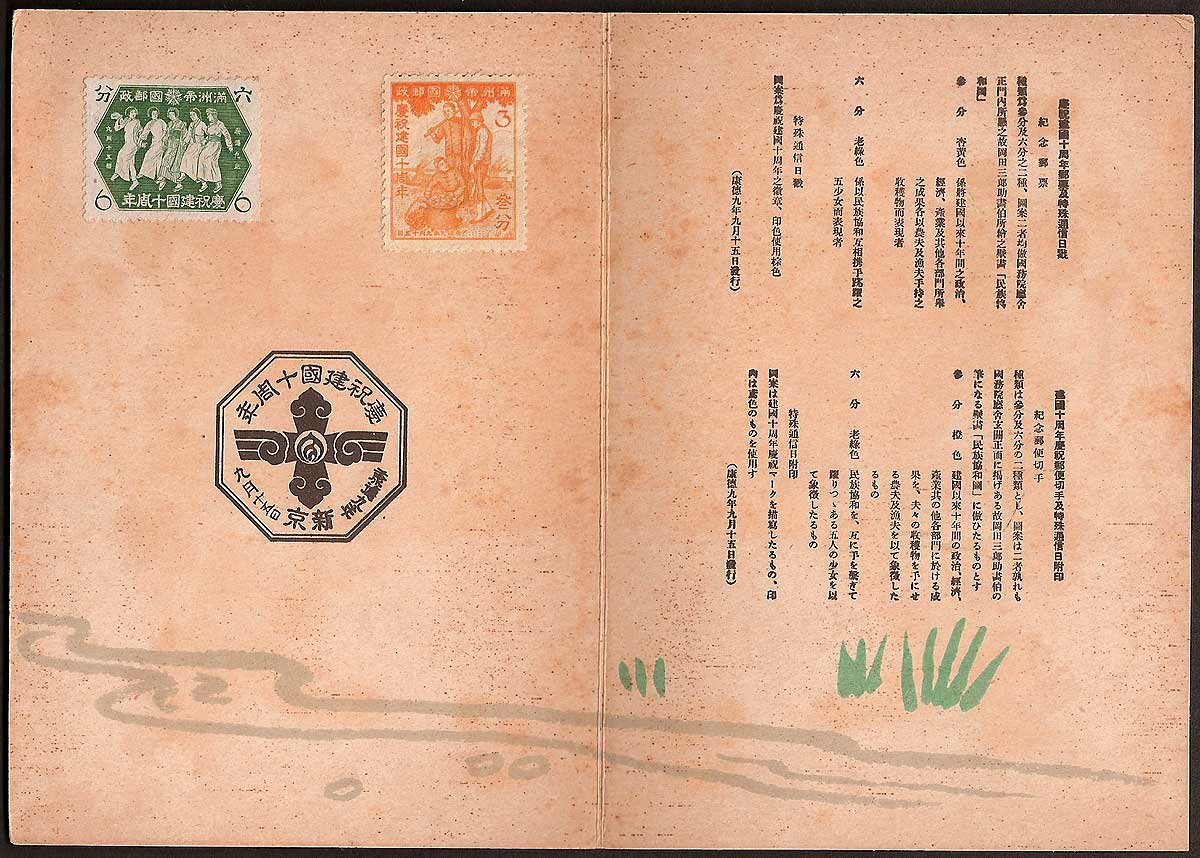
10th Anniversary of the Founding of Manchukuo National Harmony - The Second Commemorative Issue 15th September 1942. This is set of two stamps is the final issue in celebration of the 10th anniversary of Manchukuo. The 15th of September is significant because this was the official date of the formal Japanese diplomatic recognition of Manchukuo. The figures on both stamps were taken from a painting commissioned for the National Ministry Building, called "National Harmony" by Japanese artist Saburōsuke Okada. The dancing women represent the five races of Manchuria, Manchu, Chinese, Korean, Mongol and Japanese.
Original version with farmer barefoot.
Re-touched version with farmer wearing shoes (used on stamps). Recess printed on watermarked (see below) "granite" paper by the Manchukuo Postal Administration Office, Hsinking. Designs 3f by Mr Li Ping-ho and the 6f by Mr Yoai Ota. A presentation booklet exists for this issue (see below). Any "specimen" stamps or sheets you may see for this issue are fakes. The stamps had two slogans these appeared on the right margin of the 3f, and on the top margin of the 6f. These instructed "write clearly the name and address of sender and recipient" and, "wrap perfectly so things go through the mail safely".
|
||||||||
|
|
||||||||
|
4,333,000 |
3,619,000 |
|||||||
|
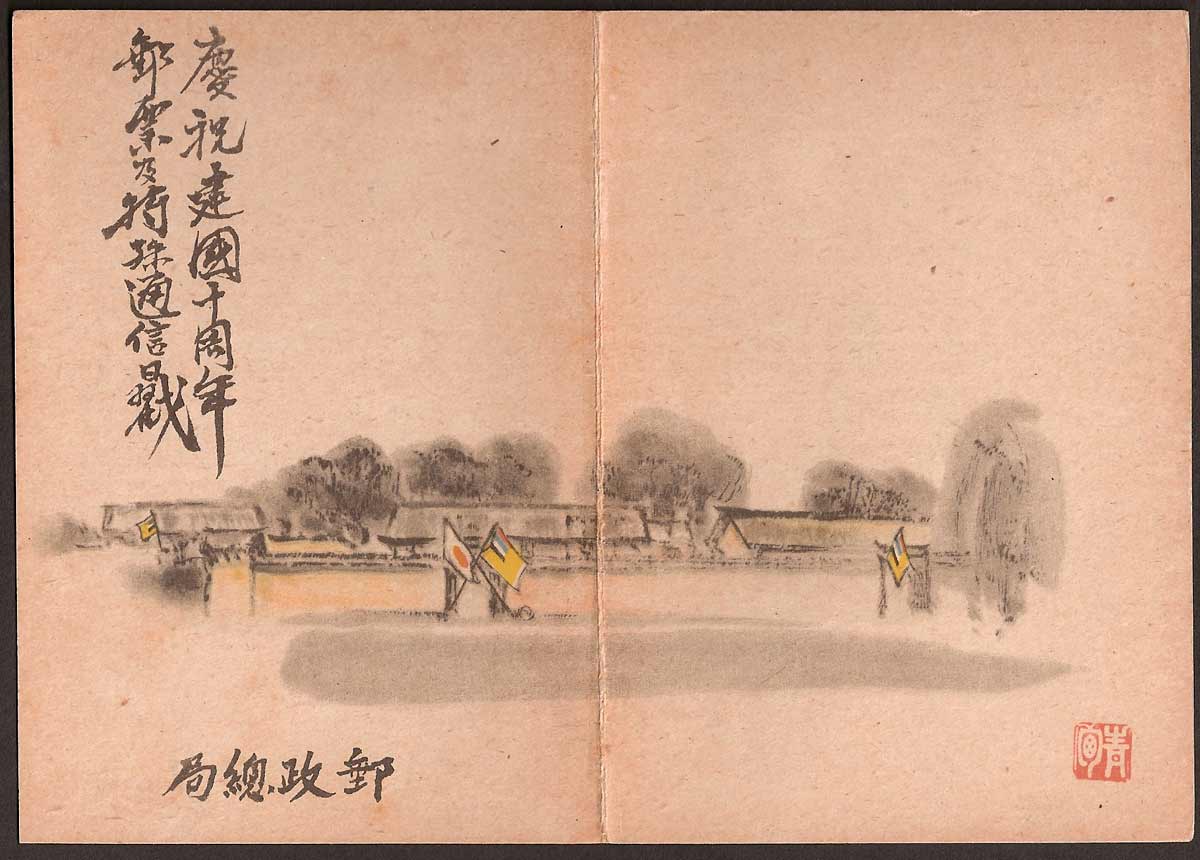
Cover and Contents of Special Presentation Booklet. To Western eyes it seems odd to see the 6f before the 3f, but it should be remembered the Japanese read right to left, all of the booklets also open in the opposite way to a Western booklet. The bottom image shows the booklet before the stamps are added, like most of these booklets it is printed in two colours, one colour being used for the image of the stamps. These booklets were sent as gifts to customers who bought a lot of stamps, it was then up to the customer to decide whether or not to add the stamps in the spaces provided. This is why sometimes you find these books with stamps attached by hinges and at other times with the stamps glued in place.
Zirkle
73
- 15th to 18th September
1942. 慶祝建國十周年 (10th Year Celebration) This is the Final Special Cancel in respect of the 10th Anniversary of the State of Manchukuo. |
||||||||
|
|
||||||||
|
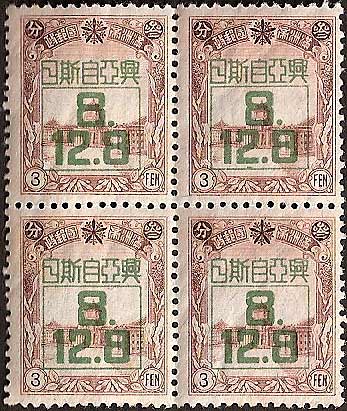
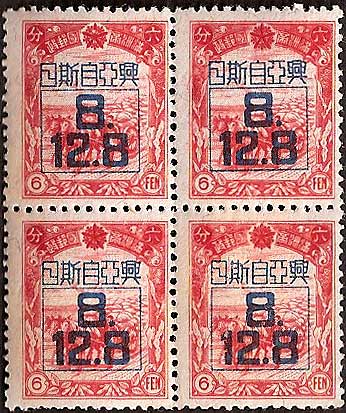
Overprint - First Anniversary of the Greater Asian War 1st December 1942. This overprint was to commemorate the anniversary of what the Japanese called the Greater Asian War, the Japanese Navy sailed to attack the American naval base at Pearl Harbour in Hawaii, the attack was successfully launched on 7th December 1941 (American time), this effectively sealed the fate of both Japan and Manchukuo. The stamps, overprinted typographically, were the 3f (in green, the domestic postcard rate) and 6f (in blue, the domestic letter rate) of the 1936 Scenery Issue by the Manchukuo Postal Administration Office, Hsinking. A presentation booklet exists for this issue (see below). Any "specimen" stamps or sheets you may see for this issue are fakes. The overprint consisted of a row of characters reading "Asiatic prosperity starts this very day" and the figures 8.12.8. signifies the date 8th December 1941. The Japanese considered the attack on Pearl Harbour to have taken place on the 8th due to differences in the way they viewed time zones.
|
||||||||
|
|
||||||||
|
2,600,000 2,000,000
Cover and Contents of the Presentation Booklet.
Special Cancel - 8th December 1942. The top characters 必勝 meaning Certain Victory (Used on the occasion of the first anniversary of the Pacific War). Not listed by Zirkle but recognized by Nihon Yushu Kyokai as a commemorative cancel. The size is 48mm dia. which makes it much larger than the standard commemorative cancels and my guess is it may have been used to promote the Certain Victory Saving Bonds - reddish brown as listed in the Encyclopaedia of Japanese Philately, revised edition 1974. Click Here to see Zirkle's Overprint Varieties
|
||||||||
|
|
||||||||
|
|
||||||||






.jpg)
.jpg)