`
   

Introduction

Manchukuo

Search

1932

1933

1934

1935

1936

1937

1938

1939

1940

1941

1942

1943

1944

1945

Airmail

Revenues

Imprinted Postcards

Seals & Labels

Savings

Commemorative Cancellations

Postmarks

Postage Due

Forgeries

Reply Coupons

Manchurian Local Overprints

Contact

Revenue Stamps

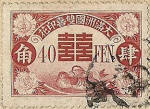
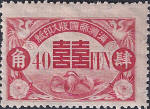
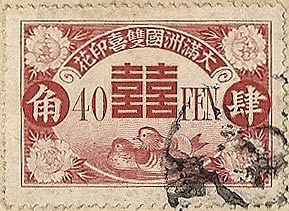
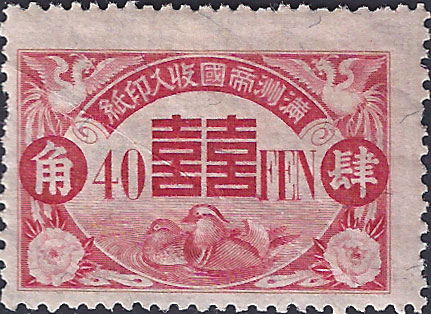
These stamps were issued for use on legal documents as a form of tax payment. Other uses of revenue stamps could be for the collection of tax on luxury goods, tobacco, matches, duty on wine and imports. Manchukuo also had two issues of a special 40f marriage registration stamp.

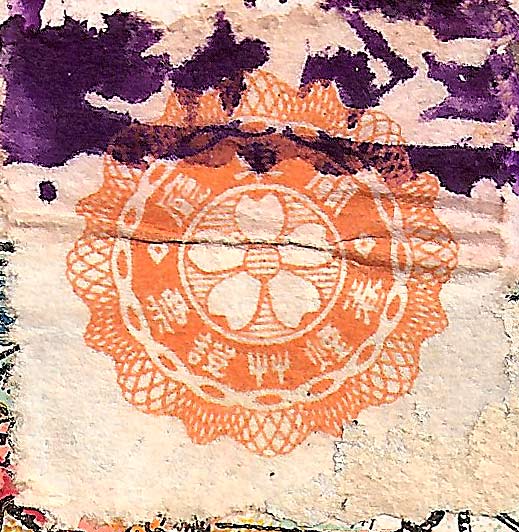
When revenue stamps were used on documents they were usually stamped with a chop, half on and half off the document (tied). These chops acted as a signature and were often registered. The chop was usually stamped in red or purple ink so that original documents could be distinguished from copies. Officials ratifying the document would often also add chops, as would other parties to any agreement. In the case of purchase tax collection, revenue stamps on invoices and receipts were cancelled in a similar way to postage stamps, to avoid re-use.


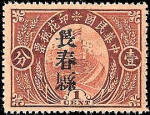
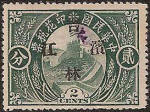
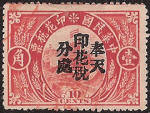
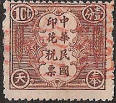
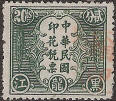
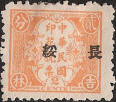
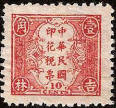
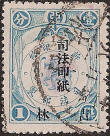
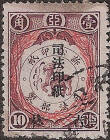
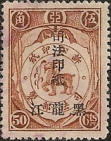
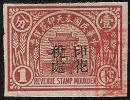
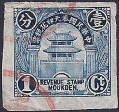
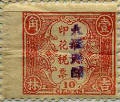
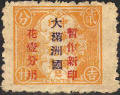
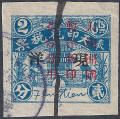
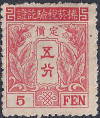
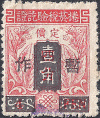
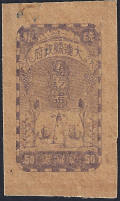
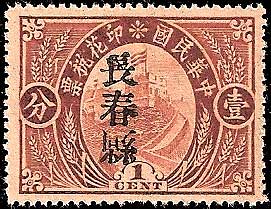
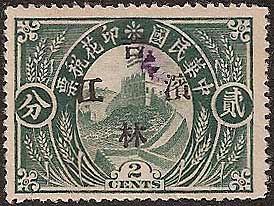
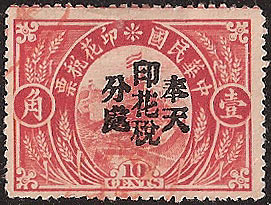
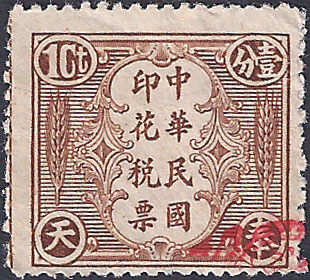
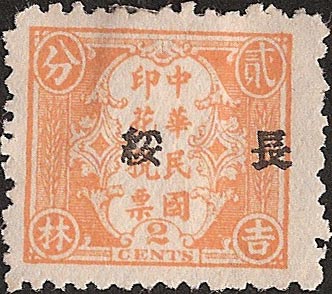
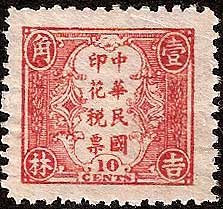
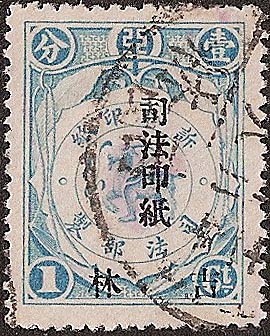
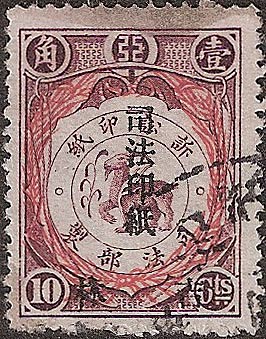
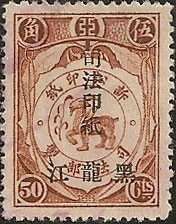
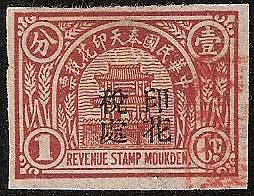
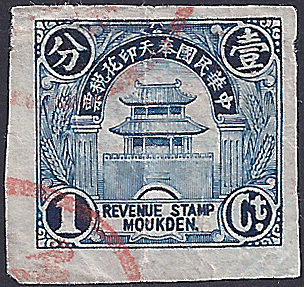
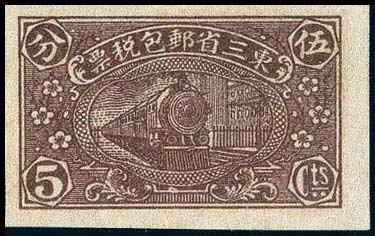
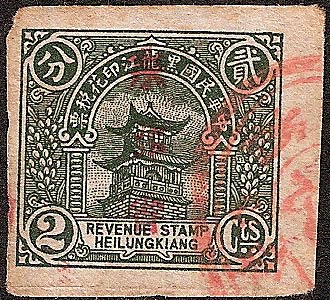
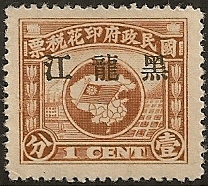
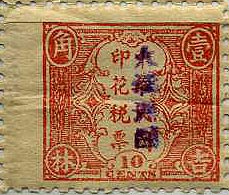
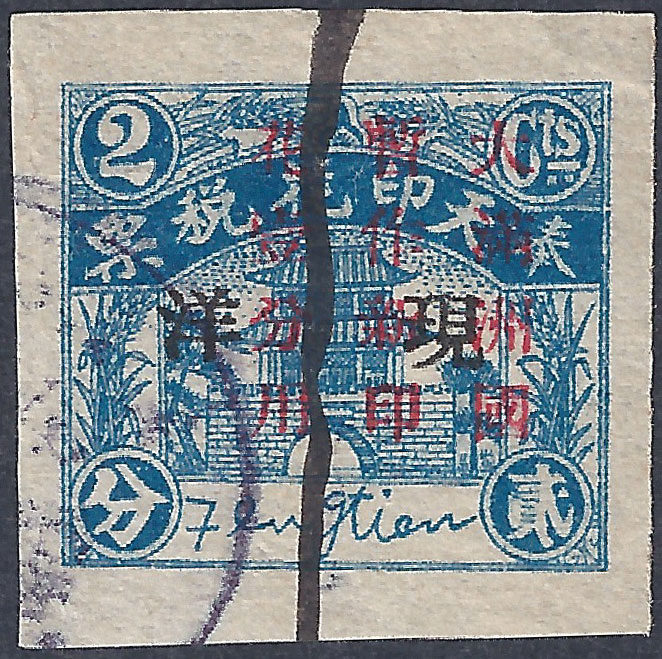
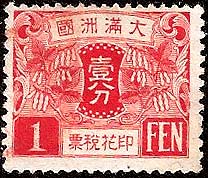
The above stamps are pre-Manchukuo revenues and can be found overprinted vertically with a chop reading Great Manchukuo, with or without surcharges. This was a temporary measure used until the release of Manchukuo's own revenue issues. To find out more about pre-Manchukuo revenues click here.

Early Provisional Overprints

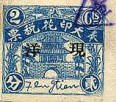
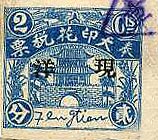
Late 1931. The above shows the first revenue issued for Manchukuo, a 4 character, violet, provisional overprint on a Wheat issue revenue stamp. The two black characters are local overprints reading 濱江 Pinchiang (Harbin).

The pale violet central overprint reads; 大滿州國 Great Manchukuo.

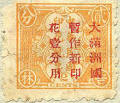
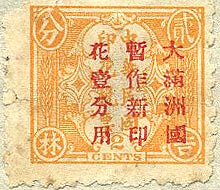
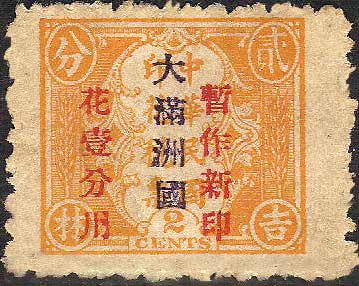
1932. The above shows a 12 character provisional overprint on a Wheat issue revenue stamp.

The black central overprint reads; 大滿州國 Great Manchukuo, the red overprint (left) 花壹分用 "Spend as 1 fen",
 and the red overprint (right) 暫作新印  "Temporary use as new stamp".

.

First Regular Issue of Manchukuo Revenue Stamps

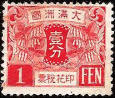
This is the first general issue of Manchukuo revenue stamps, (shown below) issued in 1932 to 1933.  They are based upon the "Republic of China" 1931 regular issue in terms of layout and feature soya beans, with the four character banner at the top changed to read "Great Manchukuo". The set has eight values from 1 fen to 10 Yuan (the 2 Yuan is missing from the set shown below).

The top panel reads - 大滿州國 Great Manchukuo (this form was only used in 1932 and early 1933)
The centre panel shows the value in Chinese.
The bottom panel reads - 印花 Stamp, 稅 Tax, Ticket.

Litho printed on white un-watermarked paper, Size 23mm x 18.5mm. Perf 13. Designer and printer unknown.


The large circular cancels indicate that the stamps have had a judicial use; payment of court fees and fines.

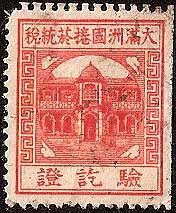
Manchukuo General Cigarette Tax Certificate

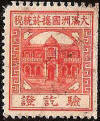
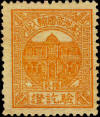
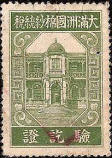
Issued in 1932. The stamps simply indicate that the correct tax has been paid on each packet of cigarettes, which is why no value is shown. The tax payable may well have changed during the life of this stamp.

The top panel reads - 大滿州國 Great Manchukuo, 捲菸 Cigarette, 統稅 General Tax
The lower panel reads - 驗訖證 Certificate.

The stamps were lithographed on un-watermarked white paper details of printers and designers are unknown.

Perf 12½ x 13½. Size 18mm x 22mm (they can also be found imperf)

All stamps show a picture of Hsinking Palace.


The second example shown is overprinted with the character (zin) meaning "new".

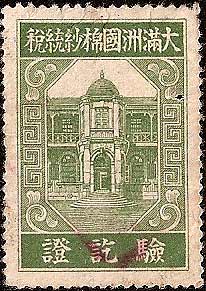
Manchukuo General Cotton Tax Certificate

1932 Cotton tax revenue stamp. The stamp has no face value and was therefore issued to prove that the tax had been paid.

The upper panel reads - 大滿州國 Great Manchukuo,  棉紗 Cotton, 統 General,Tax,
The lower panel reads - 驗訖證 Certificate.

The stamps were engraved on un-watermarked white paper details of printers and designers are unknown.

Perf 13½  x 13½. Size 21.5mm x 32mm

The stamp depicts Hsinking Palace.

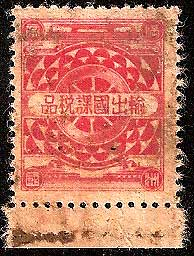
Manchukuo Export Tax Revenue Stamp

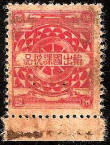
Issued c1934. This stamp has no face value and was issued to validate a receipt for export duty paid. The design is very different from that of any other stamp issued by Manchukuo. The name Manchukuo appears in the circular panels in each corner.

The central panel reads 滿州帝國 Empire of Manchuria, 輸出國 Export Country, 課稅 Taxed,Item (product).

The stamps were engraved on un-watermarked white paper details of printers and designers are unknown.

Perf 13 x 13½. Size 18.5mm x 22.5mm


Second Regular Issue of Manchukuo Revenue Stamps

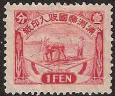
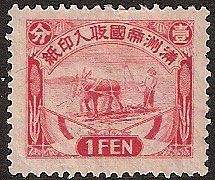
The revenue stamps shown below came into use towards the end of 1934 and the beginning of 1935. These stamps feature typical scenes associated with Manchukuo including a Kaoliang motif to the boarders and two crossed Manchukuo flags in the foreground. Chinese revenue stamps often feature wheat in the left and right borders, in Manchukuo this was changed for Kaoliang (Chinese Millet or Sorghum).

The heading reads - 滿州帝國 Empire of Manchuria 收入 Revenue 印紙 Stamp.

The stamps were engraved on watermarked (see below) "granite" paper and going by the watermark and paper the likely printers are the Central Bank of Manchukuo Printing Department in Hsinking. Designer probably Mr Hirozo Oya. No records of numbers printed exist. Proofs of all values, in blocks of 4 have noted at auction.

1f to 50f Perf 12 x 12½, 1Y to 10Y Perf 11½ x 12. Sizes see below.

1f and 2f size 22mm x 17.5mm showing Cultivation with a horse or mule drawn plough.
3f and 5f size 22mm x 17.5mm showing a camel train.
10f to 50f size 22mm x 17.5mm showing The Sungari River railway bridge.
1 yuan and 2 yuan size 27mm x 22mm showing The Qing Dynasty, Peiling Mausoleum at Mukden.
5 Yuan and 10 yuan size 27mm x 22mm showing (possibly) The Shiyakusho Building, Dairen.


Note Comb CDS Type Cancel        
       
         
    Proofs    


  Proofs exist of all denominations, with or without security holes. These appear on white, un-watermarked paper. Note the colour changes.

The above block is part of a sheet stamped with the cancel of "Nippon-Siam Trading". This may be a specimen proof from a company in Thailand trying to win a contract to print revenue stamps on behalf of the government of Manchukuo.


    Court Cancels    
         
         
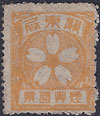
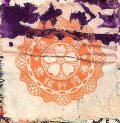
The light orange stamp on the left is a colour variety, both of the above stamps have cancels typical of court use. These cancels were applied with a roller and where this is done on a soft surface the dotted lines often perforate the stamp. Most of the used stamps have similar overprints and this indicates that they were used to pay court fees and fines.

The above characters are 法 院  Court, Printed.

         
To see examples of these stamps in use on original documents click here.
       

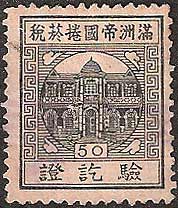
Manchukuo (Domestic) Cigarette Tax Revenue Certificate

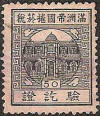
Issued in 1934. These revenues were based upon the quality of the cigarettes and the stamps simply indicate that the correct tax has been paid. This is why no value is shown.

The upper panel reads 滿州帝國 Empire of Manchuria 捲菸 CigaretteTax.
The lower panel reads -  The lower panel reads - 驗訖證 Certificate.

The colour of the stamp determines the class of domestic tobacco used - 1st Class red, 2nd Class light blue, 3rd Class brown, 4th Class indigo, 5th Class blue, 6th Class green, 7th Class purple - the numerals indicate the number of cigarettes in the wrapper. There are 12 stamps in this set, the first three classes do not show a pack size number because this tobacco was taxed at a different stage, the remainder either show a 5, 10, 20 or a 50 depending upon the number of cigarettes per pack. The 1932 stamp is headed "Great Manchukuo", this issue is simply headed "Manchukuo". (the first character reading right to left differs). Rarely stamps have been found with a monetary surcharge in red, the reason for this is unclear.

The stamp is engraved on watermarked (design unclear) white paper details of printers and designers are unknown.

Perf 12½ x 13½. Size 18mm x 22mm

All stamps show a picture of Hsinking Palace.


    Examples shown above 4th Class (50), 5th Class (20), 6th Class (10) and 7th Class (10).

      Click here to see remnants of these Cigarette Revenues in use.


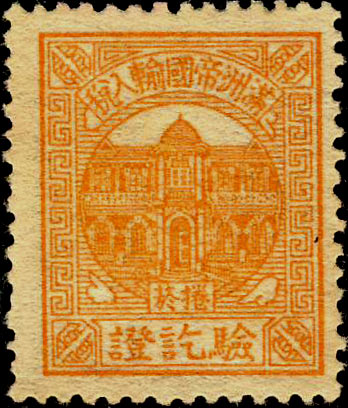
Manchukuo (Imported) Cigarette Tax Revenue Certificate

Issued in 1936. A tax paid stamp, simply indicating that the correct tax has been paid. This is why no value is shown.

The upper panel reads 滿州帝國 Empire of Manchuria 的入输 Imported
The small lower panel reads  捲菸 Cigarette.
The large bottom panel reads  驗訖證 Certificate.

There is only one version of this stamp and the use appears to be limited to all imported cigarettes. The example below is mint and has no gum, this may be an indication that the stamps were supplied without gum.

The stamp is engraved on un-watermarked white paper details of printers and designers are unknown.

Perf 13 x 13½. Size 18mm x 22mm

The stamp features a picture of Hsinking Palace.


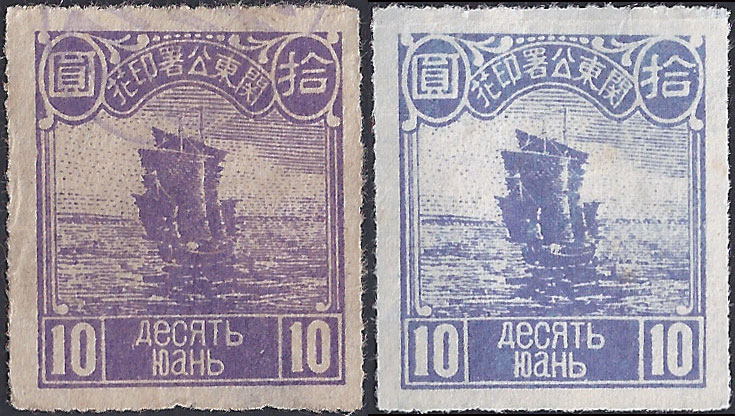
Third Regular Issue of Manchukuo Revenue Stamps

     
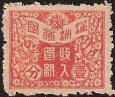
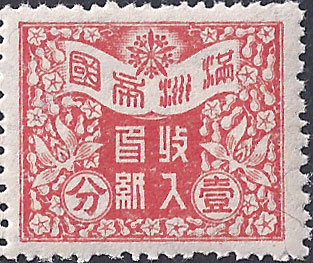
Issued in 1944 the Third Regular Issue is a set of 13 values - 1 fen, 2fen, 3fen. 5fen, 10fen (1chiao), 20fen (2chiao), 50fen (5chiao), 1yuan, 2yuan, 5yuan, 10yuan, 50yuan and 100yuan. Designs vary, the lower values feature beans and flowers, higher values have a more stylised pattern. These are the only revenue stamps to feature the Orchid emblem of Manchukuo. The poor quality of the perforation is typical of stamps produced in Manchukuo towards the end of the war.

The upper curved panel reads  滿州帝國 Empire of Manchuria.
The lower panel reads 收入 Revenue 印紙 Stamp.
The two circular panels show that value in Chinese, all characters used are highly stylized.

The stamps were litho printed on watermarked (see below) "granite" paper by the Central Bank of Manchukuo Printing Department in Hsinking. Designer unknown. No records of numbers printed exist.

Perf 13½ x 13.
Values 1f to 50f size 23mm x 18.5mm.
Values 1Y to 10Y size 28mm x 22.5mm.
Values 50Y to 100Y size 44mm x 26mm.


1 fen 2 fen 3 fen
     
Set incomplete - see above
5 fen   10 fen (1chiao)
     
After the fall of Manchukuo in 1945 many of these stamps were overprinted with a vertical chop in black reading "Republic of China" and can even be found with a Russian chop. They obviously continued in use for a time in a similar way to the Manchurian Local Overprints until new Chinese stamps were produced.

To see examples of these stamps in use on original documents click here.


Harbin Municipal Revenue Issues

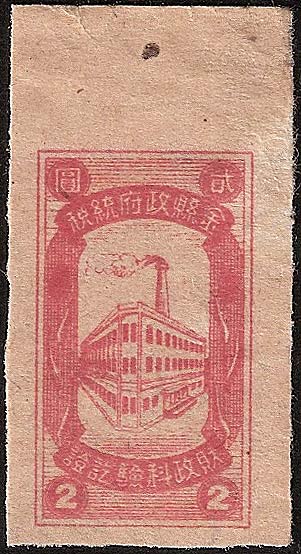
In 1932 Harbin, the second largest city in Manchukuo was classed as a "Special City" and a separate entity with regards to administration. This status ended in 1936 when it was incorporated into Binkiang province. During its time as a "Special City", revenue stamps were issued as a form of local taxation. Three issues are known to exist a c1932 handicraft tax stamp (set of 2, 10f and 1Y), a c1933 general tax issue (set of 3, 10f, 30f and 1Y) and a c1935 set part of which is shown below.

Municipal revenue stamps are also recorded for Hsinking, Kirin and Mukden and sections for these will be added as stamps are found to illustrate these issues. Mukden had the highest population in 1940 of 1.35 million, Harbin 662,000, Hsinking 544,000 and Kirin 173,500.


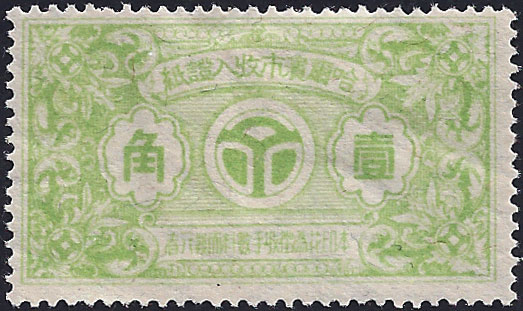
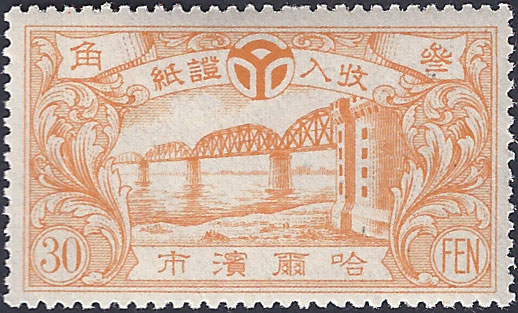
Harbin Second General Municipal Revenue Issue

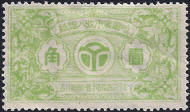
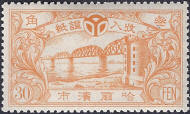
c1935, this issue replaced the earlier general revenue issue that appeared c1933. The two sets are very similar in design with the later set having six character in the bottom panel (see below), whereas the earlier set had only four 哈爾濱市 – Harbin City. All municipal revenue stamp issues feature the distinctive Harbin city emblem.

The characters in the left and right top corners show the value in Chinese.
The curved top banner reads 收入 Revenue, 證 Certificate, 紙 Paper.
The line of characters at the bottom read 哈爾濱 Harbin, 特別市 Special District.

The stamps were lithographed on un-watermarked white paper details of printers and designers are unknown.

Perf 13 x 13. Size 40.4mm x 22.5mm

Stamps 10f, 30f and 50f show The Sungari River Bridge at Harbin.
Stamps 1Y, 5Y and possibly 30Y and 50Y show the Russian Orthodox Church, Harbin.


The above set is incomplete, the cancels read 哈爾濱市 – Harbin City
     
     
Moukden Municipal Revenue Issue

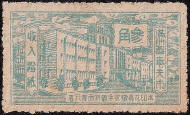
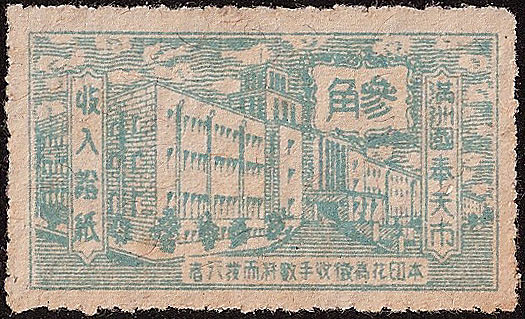
c1934, this issue is the only municipal issued in Moukden (Fengtien). The set consists of three stamps, in addition to the two shown below there is also a 15f in red. All stamps are of identical design.

The characters in the right top panel show the value in Chinese.
The left hand panel reads 收入 Revenue, 證 Certificate, 紙 Paper.
The characters right hand panel read, 滿州國奉天Empire of Manchuria, Fengtien City.

The stamps were lithographed on watermarked (see below) "granite" paper details of printers and designers are unknown. The stamps have a brush applied straw coloured gum.

Perf 13 x 13½. Size 40mm x 22mm

Stamps 15f, 30f and 50f show a large municipal building.


Kwantung Leased Territory Revenue Issues

Prior to 1932 Japan leased part of the Laiodong peninsula from China, this included the important strategic ports of Darien and Port Arthur. After the formation of Manchukuo this area came under the notional ownership of the Manchukuo government and Japan was granted a new lease. The  Kwantung Leased Territory (KLT),  although considered part of Manchukuo, was wholly administered by the Japanese. The Japanese issued their own tobacco tax revenue stamps for use in this region and some of these appear below.

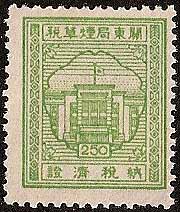
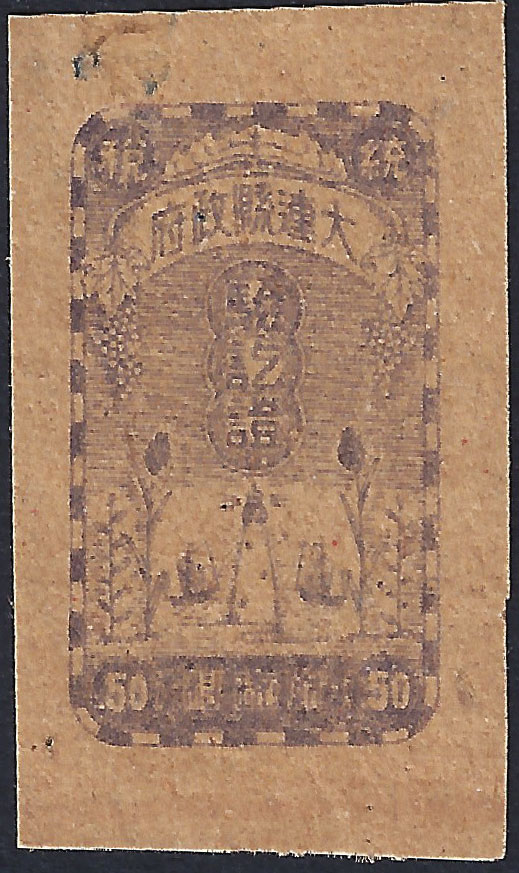
Kwantung Cigarette Revenue
     
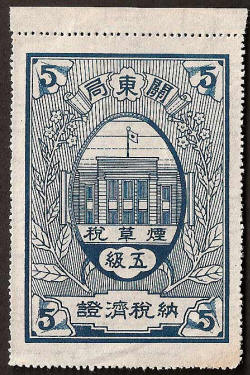
Issued in 1933 this revenue stamp was designed to seal a wrapper of cigarettes and was intended to be torn when the pack was opened to avoid re-use. This is why the stamp needed to be so large. The tobacco was graded 1 to 7, with the class shown in Arabic numerals in each corner and in Chinese characters inside the oval cartouche. The full set therefore consists on 7 stamps.

Top three characters 關東 Kwantung Bureau
Three Characters below the building 煙草稅 Cigarette Tax
Two characters in the cloud shape Five, Grade
Bottom four characters 納稅 Pay Tax, 濟證 Certificate

The stamps were engraved on watermarked white paper, details of printers and designers are unknown.

Perf 1 x 12. Size 46.3mm x 65.7mm

The stamp depicts The Kwantung Prefecture Offices - note the Japanese flag.

Cigarettes 5th Class


Kwantung Cigarette Revenue

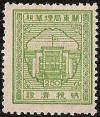
This issue was used as a tax paid revenue for cigarettes. The set is also of seven stamps, one for each grade of tobacco. The colour coding for the grades is Class 1 red, Class 2 light blue, Class 3 brown, Class 4 dark blue, Class 5 mid blue, Class 3 green, Class 7 purple. A similar design exists for cigars using the same class numbers but with different characters in the top banner.

The top panel reads 關東 Kwantung Bureau  煙草稅 Cigarette Tax
Bottom four characters 納稅 Pay Tax, 濟證 Certificate

The stamps were engraved on watermarked thin white paper, details of printers and designers are unknown.

Perf 13  x 13½. Size 18.5mm x 22mm

The stamp depicts The Kwantung Prefecture Offices.

Pack of 250 cigarettes 6th Class


Kwantung Tobacco Revenue

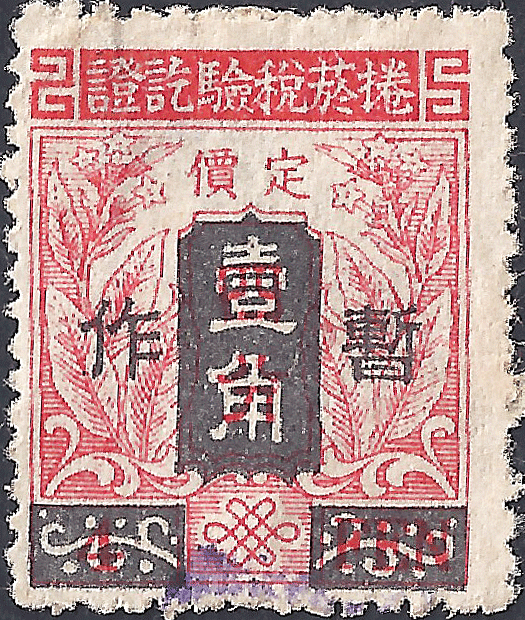
This stamp is thought to have been issued in 1939 and the value shown is the retail price of the tobacco purchased including tax. There are 16 values in the set which runs from 5f to 90f.

The top panel reads 捲菸 Cigarette, Tax, 驗訖證 Certificate
Below this 定價 Price
The value of each stamp is shown in the centre panel.

The stamps were engraved on un-watermarked thin white paper, details of printers and designers are unknown.

Perf 10½  x 10½. Size 19.5mm x 23.3mm

The stamp depicts Tobacco Leaves.


  Click here to see remnants of these Cigarette Revenues in use.

     
Manchurian Industrial Bank Receipt Labels
     
These items are not to be confused with revenue stamps. They were issued by the Manchurian Industrial Bank and used as a receipt of deposit on investment documents.

They date from 1943 to 1944, Rouletted 12½, size 17.6mm x 9.5mm.


The values relate to the final value of each investment. The characters read; top - 规约票 "regulated ticket", centre - investment value in Yuan, bottom - 手切金票 "amount/golden notes/cheque". These stamps can be seen in use here.