|
||||||||
|
|
||||||||
|
|
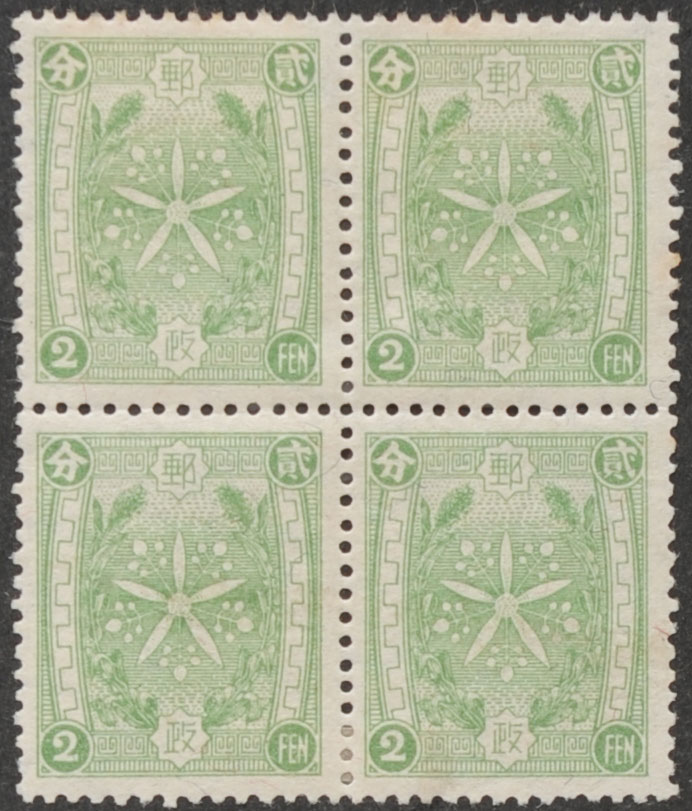
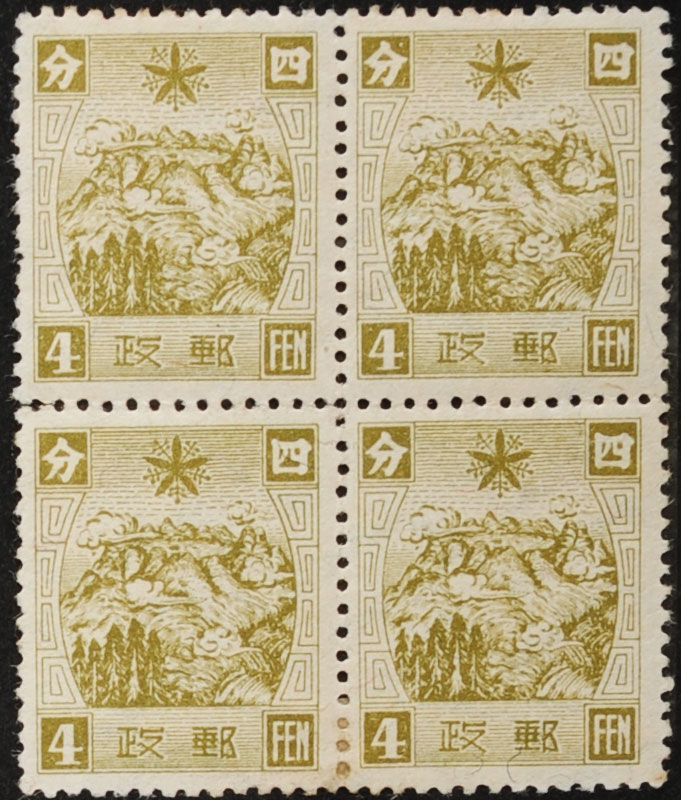
Postage Stamps Manchukuo Year 2 康德 Kāngdé Sino-Manchukuo Postal Agreement The Sino-Manchukuo Postal Agreement in December 1934 resulted in the issue in 1935 of new "China Mail" stamps (below) which omitted the name Manchukuo, (the so called face-saving stamps) a compromise to placate the Chinese Government. Instead of the country name of Manchukuo these stamps simply carried the legend 郵政 (Yóuzhèng) meaning Postal Service. From 10th January 1935 mail was exchanged at 山海關 Shan-hai-kuan (where both China and Manchukuo had a post office). The agreement resulted in a price change for mail to China only. Letters to China now cost 4f and post cards 2f, all other items were unchanged. |
|||||||
|
|
||||||||
|
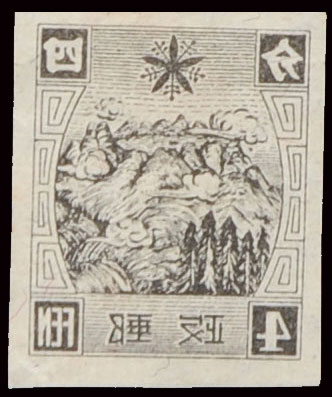
Special China Mail Stamps (First Issue) This set was issued to Post Offices on 1st January 1935 for post between Manchukuo and China and is the first to feature the Manchukuo Imperial Crest (which appears on most subsequent Manchukuo stamps). The stamps were released for sale to the public on 10th January 1935, an imprinted postcard was also made available at the same time. Prior to the launch of these stamps imperforate sets were issued to members of the press for publicity purposes, these are extremely rare due to the small number circulated. Prior to 1935 China blacked out the name Manchukuo on stamps and applied Postage Due charges to all deliveries, the sender effectively paying three times normal postage. The Sino-Manchukuo Postal Agreement in December 1934 resulted in these new "China Mail" stamps which omitted the name Manchukuo, (the so called face-saving stamps) a compromise to placate the Chinese Government. If necessary "China Mail" stamps could also be used for internal and overseas mail. Fine used versions of these stamps are usually those that have been used inside Manchukuo or overseas, the Chinese postal workers still defaced the stamps when they arrived in China using a dab of black ink applied with a brush. They objected to the year date being that of Manchukuo and not of China. See postmarks.
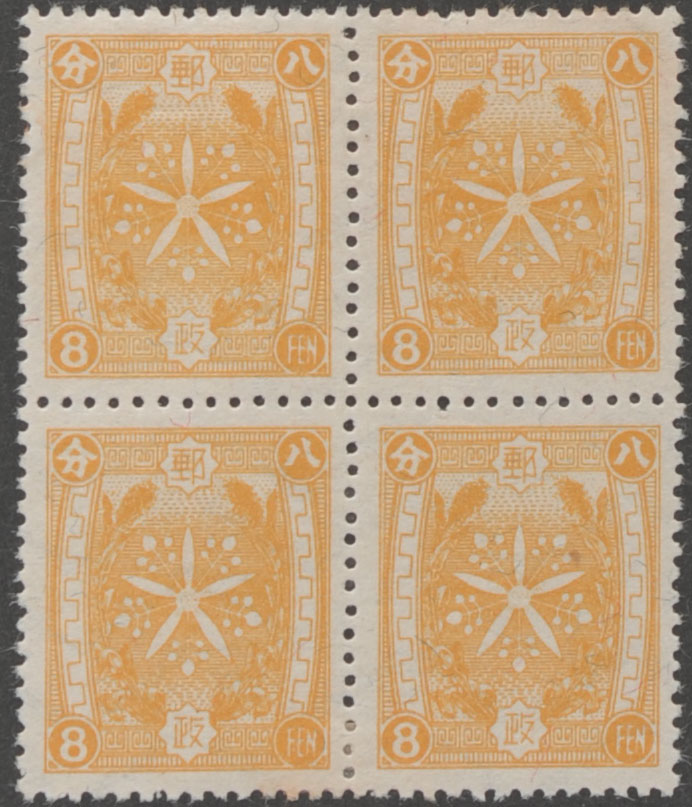
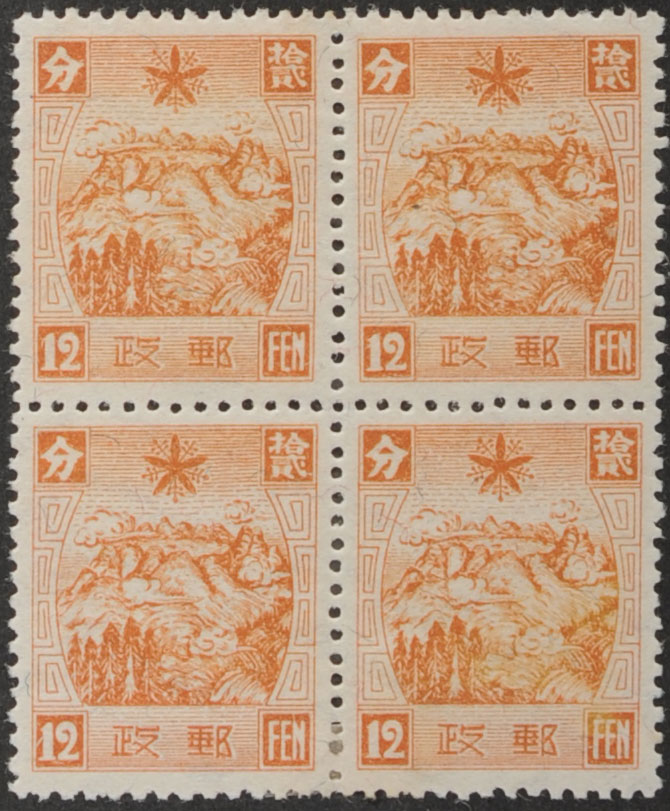
Example - Mail to China. A dab ink was often applied over the year number on the postmark. The stamps were litho printed on watermarked (see below) "granite" paper in sheets of 100 by the Central Bank of Manchukuo Printing Department in Hsinking. Designer Mr Hirozo Oya. No records of numbers printed exist. The "zig-zag" lines watermark is the first to have been used in Japan having been introduced as far back as 1914. Both Scott and Stanley Gibbons catalogues show this watermark running vertically on stamps - it runs horizontally as shown. The stamps are 18.5mm x 22mm, Perf 13 x 13½. (Some imperf proofs with no gum are known to exist) The set consisted of 4 stamps, 2f and 8f featuring the Imperial Crest of Manchukuo and a 4f and 12f showing 長白山 Zhǎngbáishān (Mount Changbai) and the Heavenly Lake. The lake is the crater of a volcano, its magical blue waters keep flowing out without causing a change in the water level. Zhǎngbáishān is the Chinese name for the Mountain and Baitoushan (White-headed Mountain) is the Chinese reading of the Korean name (Baekdusan) for the same mountain. |
||||||||
 |
||||||||
|
(China postcard rate) (China 20g letter rate) |
||||||||
|
|
||||||||
| (China registered) | (China AR) | |||||||
 |
||||||||
| Proof Copy | ||||||||
| Confused by the various China Mail issues? - Click Here | ||||||||
|
|
||||||||
|
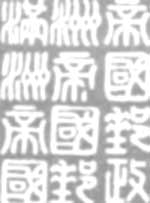
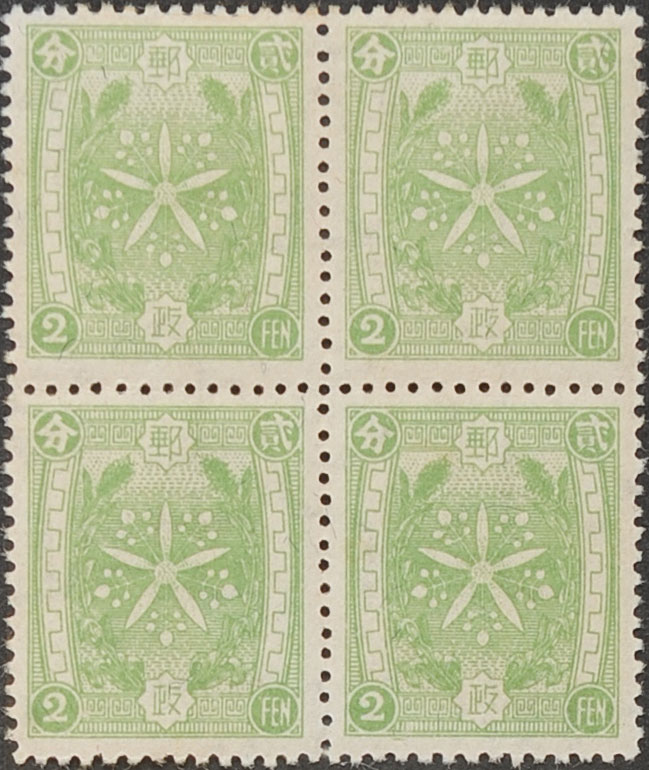
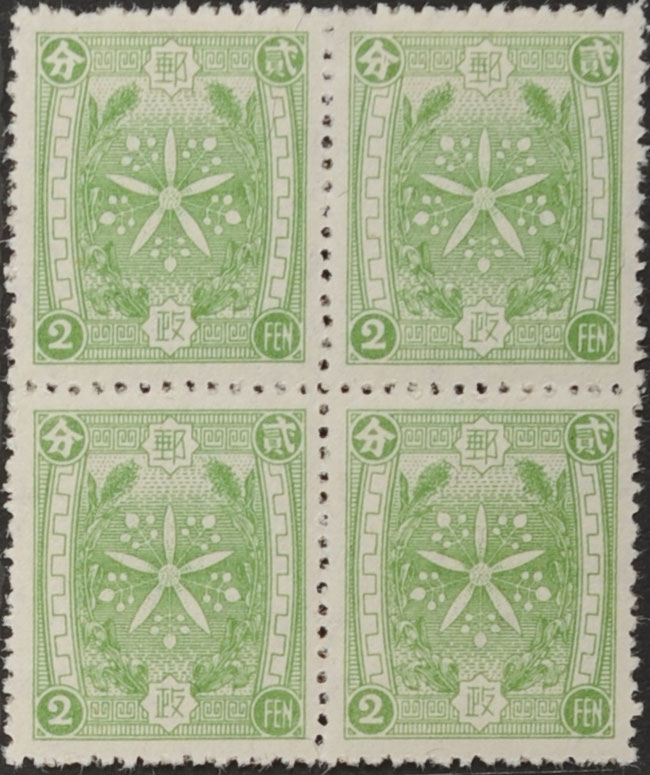
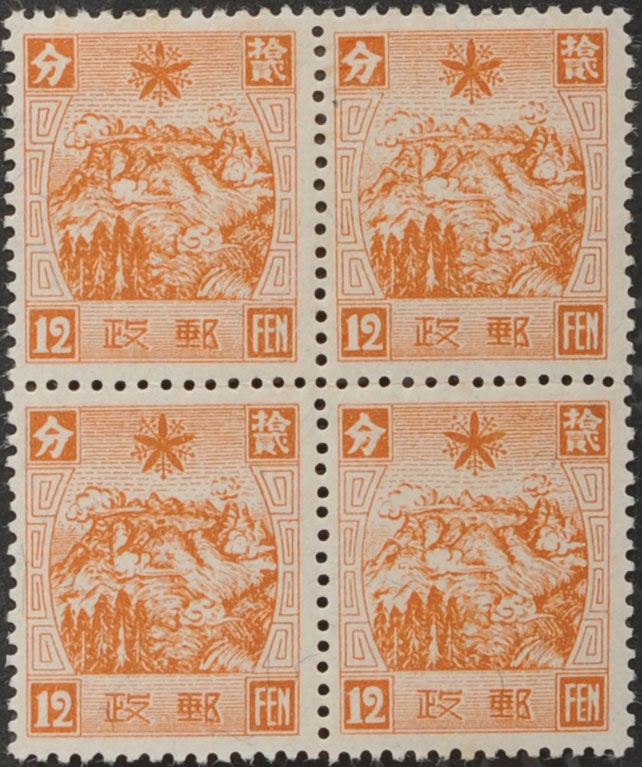
Special China Mail Stamps (Second Issue) This set is very similar to the first issue the stamps were litho printed on watermarked (see below) "granite" paper in sheets of 100 by the Central Bank of Manchukuo Printing Department in Hsinking. Designer Mr Hirozo Oya, numbers printed unknown. In this issue the 2f is found in two distinctive colour varieties of pale green and light green also the 12f is slightly less orange than the first China mail issue. The stamps are 18.5mm x 22mm, Perf 13 x 13½. Issued on 1st March 1935 this was effectively a second printing on new paper with a different watermark. The watermark is made up of six characters reading 政郵國洲滿 "Manchu State Postal Administration" although only a part of this appears on any one stamp.
The set consisted of 3 stamps, 2f and 8f featuring the Imperial Crest of Manchukuo and 12f showing 長白山 Zhǎngbáishān (Mount Changbai) and the Heavenly Lake, the birthplace of the Manchu dynasty.
|
||||||||
 |
||||||||

 |
||||||||
|
|
||||||||
|
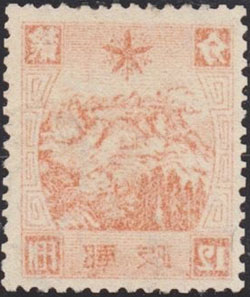
Above Variety - 12f Mirror Offset |
||||||||
|
Confused by the various China Mail issues? - Click Here |
||||||||
|
|
||||||||
|
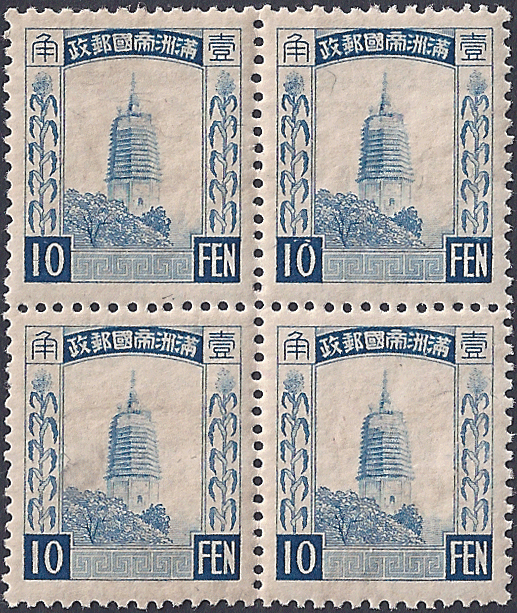
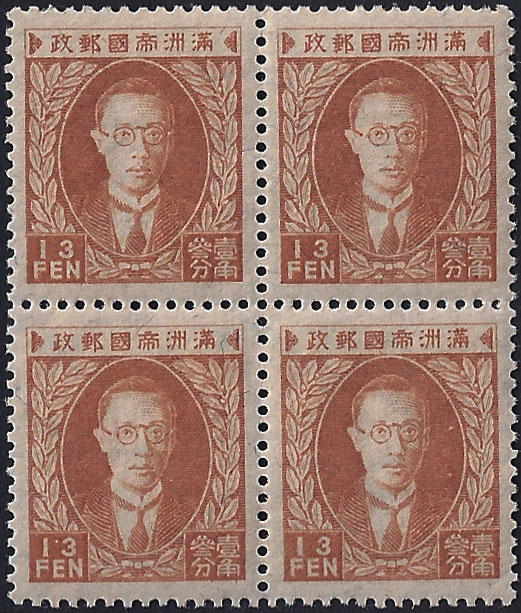
State of Manchukuo (Third Regular Issue - addition) Due to changes in postal rates a 10f and 13f stamps were added to this issue in July 1935. These stamps are slightly smaller than previous issues. The extra stamps were recess printed on watermarked (see below) "granite" paper in sheets of 100 by the Central Bank of Manchukuo Printing Department in Hsinking. Designs by Mr Yutaka Yoshida. The stamps are 18.3mm x 21.5mm Perf 13 x 13½ (this is slightly smaller than the last edition).
In this issue the 10f depicts the White Pagoda at Liaoyang and the new value 13f The Emperor Kang-teh.
|
||||||||
 |
||||||||
|
|
||||||||
|
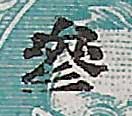
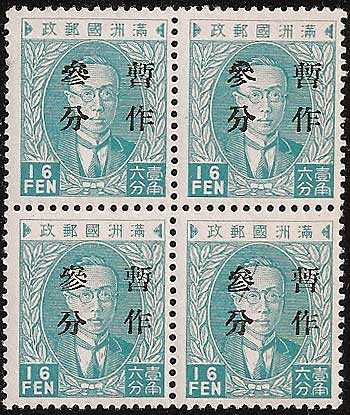
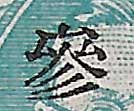
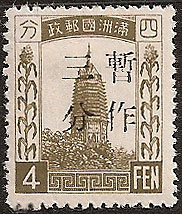
State of Manchukuo (Second Surcharge in Harbin) At the start of 1935 there was a shortage of 3f stamps which was a problem because this was the most popular denomination as it was used for domestic letter post. As a quick fix the postal authorities overprinted stocks of the first and second regular issues using denominations of which they had an oversupply. The overprint consists of 4 characters, the two on the left being the denomination 三 or 參 for three and 分 "Fen" (identical to the Chinese character for "cent"), the two on the right 暫作 meaning "temporary use". The Postal Authorities started with the 16f of the first regular issue overprinting it with 3f using the formal Chinese character for the number three. In March they repeated the process with 4f stamps from both the first and second regular issues but this time they used a simple Chinese character for the number three. The reason for this change is unknown. The number of overprints is not recorded. Typographic overprinting by the Chikazawa Yoko Company in Harbin.
3f on 16f 1932 Issue
(No Wmk) 13 February 1935 surcharged in black ink
|
||||||||
 |
 |
 |
||||||
|
No watermark - First Regular Issue |
No watermark - First Regular Issue |
Watermarked - Second Regular Issue |
||||||
|
Type "a" |
|
 Type "c" |
||||||
|
Normal |
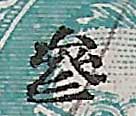 Type "b" |
|||||||
|
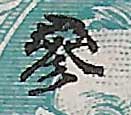
Varieties - The above block of four stamps contains each of the recognised varieties illustrated by the "Ming" character, the traditional character for the number 3 (“Ming” in this instance refers to Ming typeface, the more complicated traditional numbers were often used on documents to prevent forgery). All four types exist only in the top right hand block of four of each sheet, stamps 9, 10, 19 and 20. This block is very desirable to collectors and therefore valuable. Note: Most catalogues seem to have copied Akagi's sketch of the four "Ming" character varieties; you will see from the above that the actual characters are somewhat different. As far as I know, only the JSCA catalogue has taken the trouble to study real examples and show an accurate representation. |
||||||||
|
|
||||||||
|
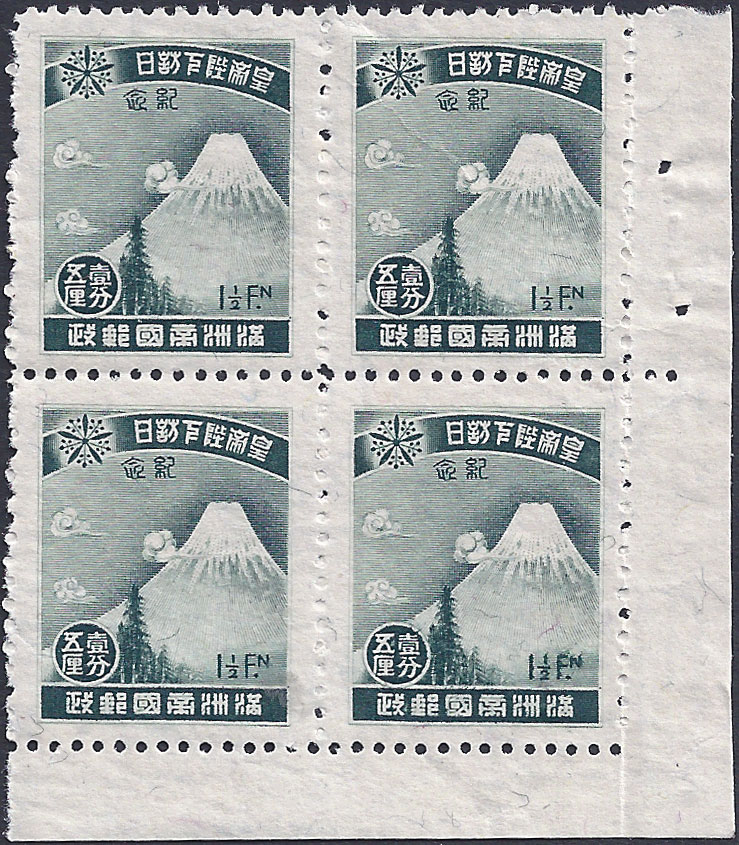
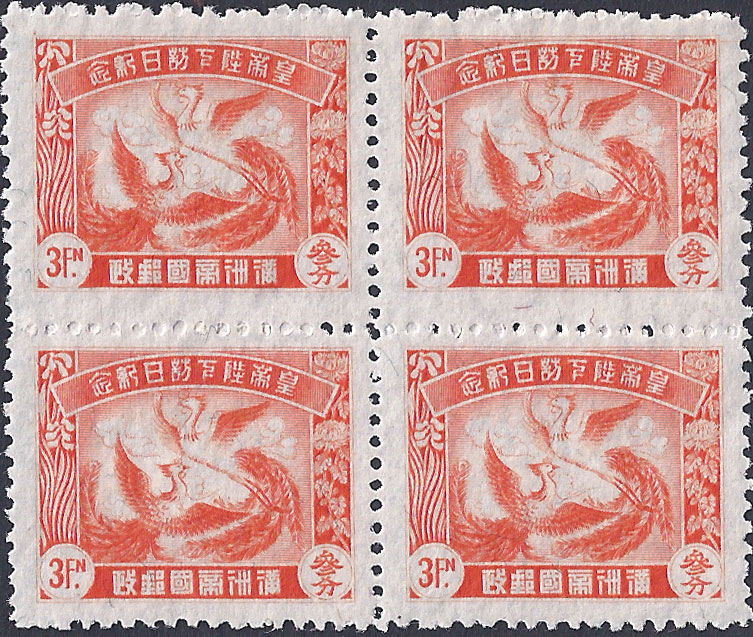
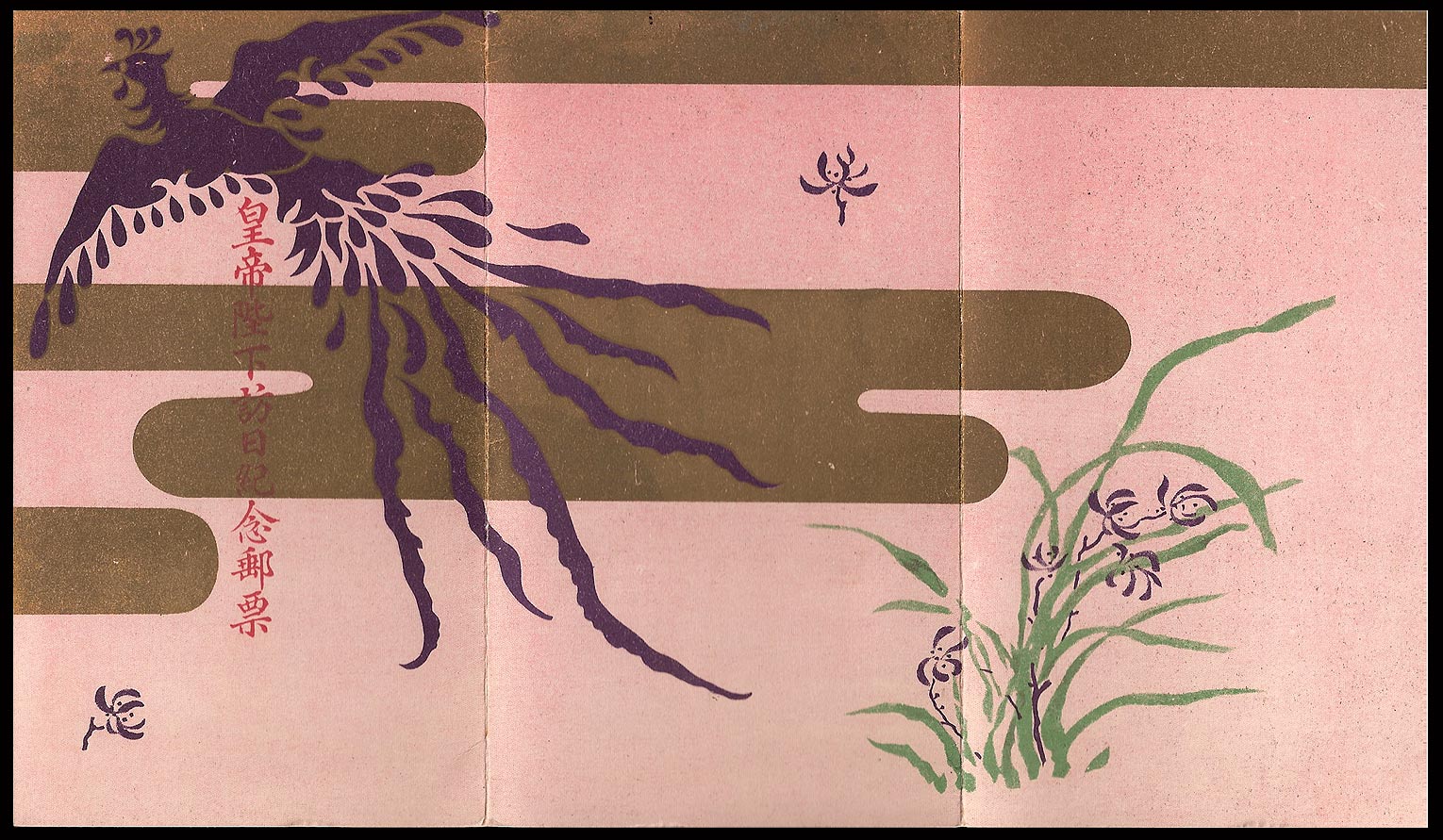
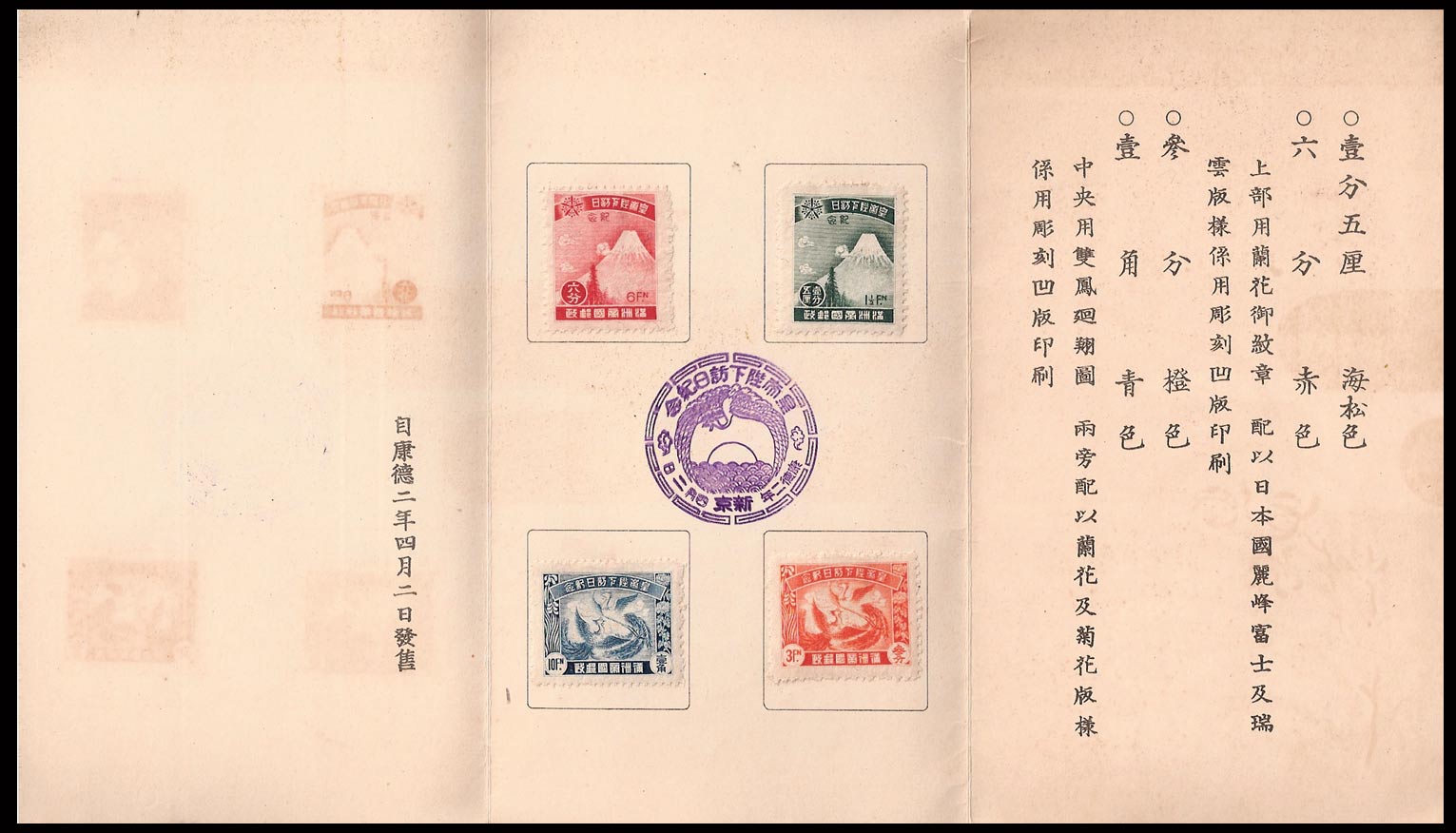
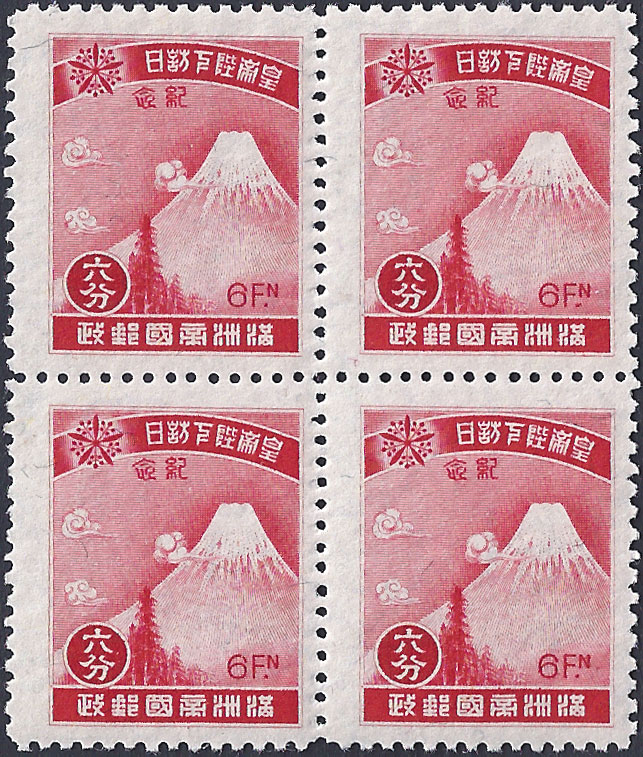
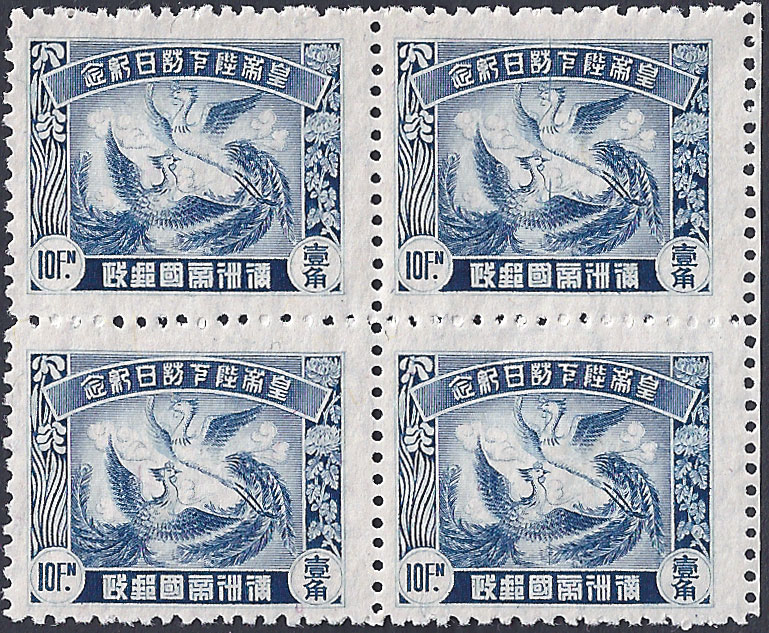
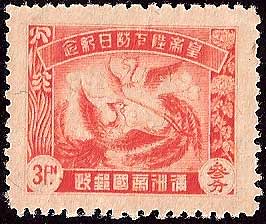
The First Visit by the Emperor Kāngdé to Japan This is a commemorative issue available from 2nd April 1935. The first visit by the Emperor Kang-teh to Japan was seen as a very auspicious event and was in return for a previous visit to Manchukuo by Prince Chichibu, younger brother of the Showa Emperor and Imperial Envoy. The Japanese Government sent the cruiser "Hiei" to provide the Emperor with transport and showed him every courtesy during the visit. When the Emperor returned he issued the first Imperial Rescript in celebration of the indivisible bond between the two countries. The stamps abound with symbolism, Mount Fuji and Chrysanthemums' are associated with Japan, while Feng Huang and Orchids represent Manchukuo. The stamps were recess printed on watermarked (see below) "granite" paper in sheets of 100 by the Central Bank of Manchukuo Printing Department in Hsinking. Designs by Mr Hirozo Oya. A commemorative cancel and presentation booklet exists for this issue (see below) and a special set of two picture postcards appeared for sale though Post Offices, these can be seen here. The stamps are 18.5mm x 22.5mm or 22.5mm x 18.5mm, Normal Perf 11, the 3 & 10 fen only may have compound perforations with one side 12¼ to 12½ in stamps from a few sheets only. Some catalogues mention a Red Orange variety of the 3f, these do exist but are hard to find; most of the examples you see advertised are the normal 3f stamp which also has a good deal of red in the colouration. I doubted it's existence until I finally found a genuine example.
The 1½f and 6f shown Mount Fuji in honour of the Japanese and the 3f and 10f Dancing Feng Huang (resembling the Phoenix, the male is Feng and the female is Huang, in China these are the mythical lords of all birds).
|
||||||||
|
|
||||||||
|
300,000 |
200,000 |
|||||||
 |
||||||||
|
|
1,500,000 |
200,000 |
|
|||||
 |
||||||||
| Red Orange Variety | ||||||||
|
Cover and Contents of Special Presentation Booklet
Zirkle
12
- Issued 2nd, 6th,
and 24th April 1935
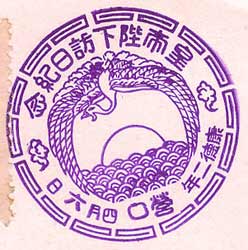
皇帝(Emperor) 陛下(His Majesty )访 (Visit) 日(Japan) Issued in recognition of the Emperors first visit to Japan. This depicts Phoenix over the sea, with the rising sun as a clear reference to Japan. The three dates of issue represent dates of the Emperor's departure, arrival in Japan and return to Manchukuo.
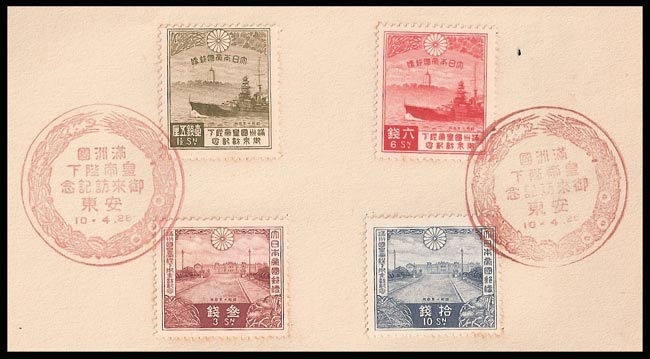
In Japan they produced a set of four stamps to celebrate the visit, together with a special cancel. The above example came from the SMRZ Post Office in Antung. The 1½sn and 6sn Stamps show the cruiser "Hiei" and the white pagoda at Liaoyang, the 3sn and 10sn stamps depict the Akasaka Palace.
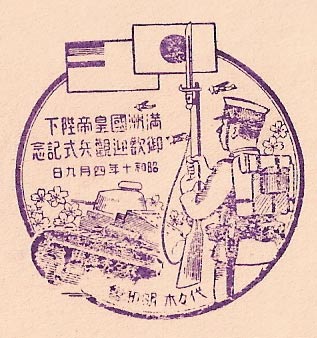
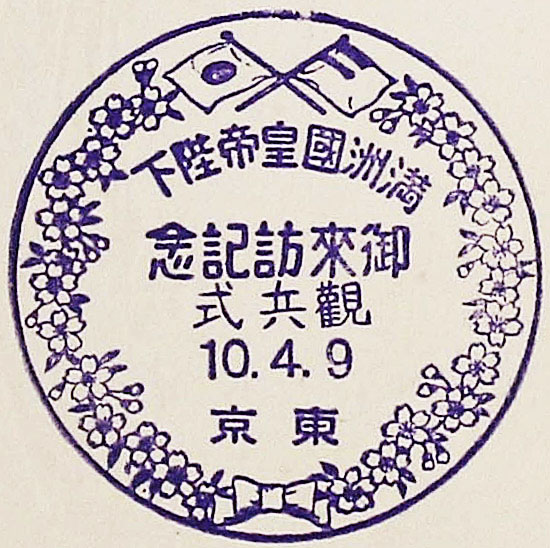
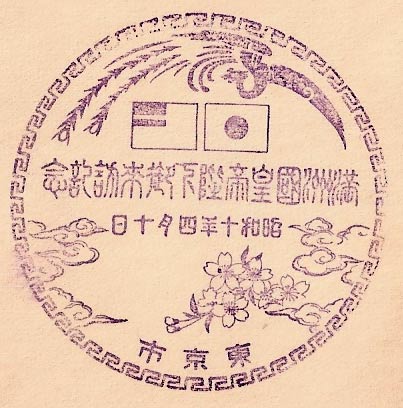
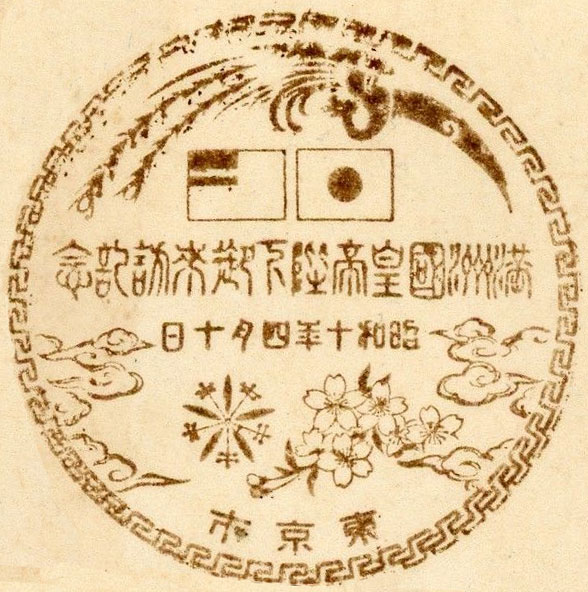
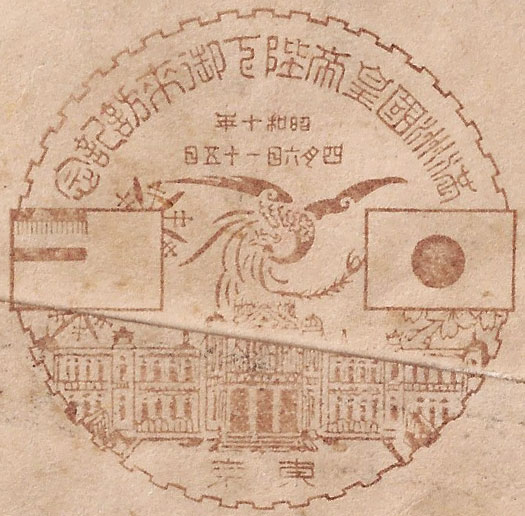
Above are three Japanese Cachets issued to commemorate the visit, they have no postal validity. Cachets like this were privately produced by stamp dealers, postcard sellers and others, mostly for sale to overseas collectors. The first and second dated 9th April 1935 read "Welcoming Review of Troops Commemorating the Visit of the Emperor of Manchoukuo" and "Review of the troops commemorating the visit of the Emperor of Manchoukuo" the last three dated 10th April 1935 simply read "Commemorating the Visit of the Emperor of Manchoukuo" all come from Tokyo.
|
||||||||
 |
||||||||