|
||||||
|
|
||||||
|
|
||||||
|
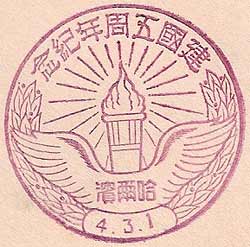
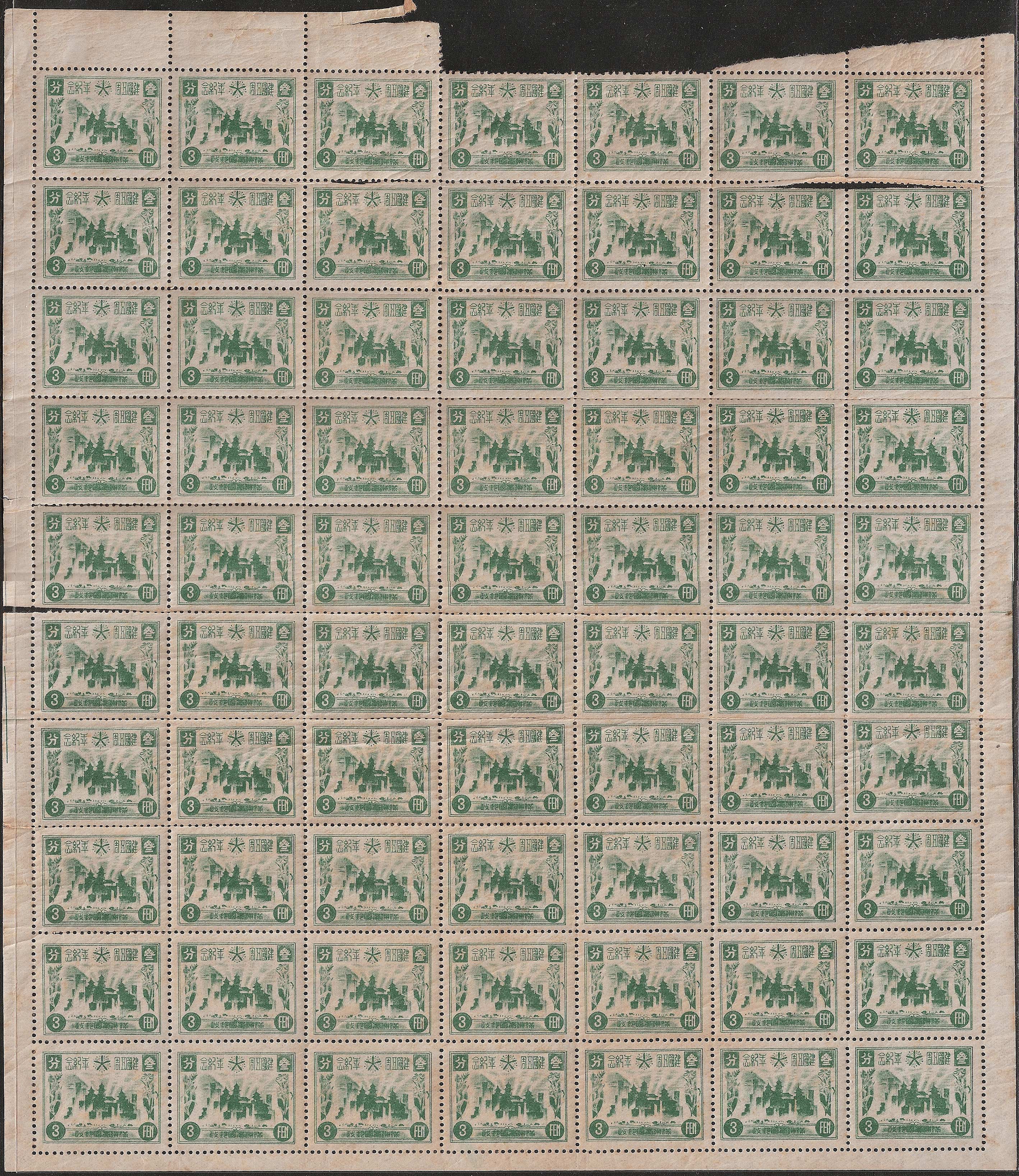
Postage Stamps Manchukuo Year 4 康德 Kāngdé Fifth Anniversary of the Founding of Manchukuo 1st March 1937, this is a commemorative issue celebrating the fifth anniversary of the founding of Manchukuo. A commemorative cancel and a special set of two picture postcards appeared for sale though Post Offices, these can be seen here. Any "specimen" stamps or sheets you may see for this issue are fakes. The stamps were lithograph printed on un-watermarked "granite" paper in sheets of 70 by the Manchukuo Government Supplies Division, Hsinking. Designs by Mr Hirozo Oya. The stamps are 21.5mm x 27.5mm and 27mm x 21.5mm. Perf 12½. 1½f, stamp. Rising Sun and stylized clouds over a ploughed Manchurian field. The majority of 1½f these stamps are thought to have come from the Post Office at Mukden. Although the print run is shown as 210,000 stamps it is rumoured that many sheets had to be destroyed due to defects, this may be one reason for the remaining supply being issued in Mukden. 3f, stamp. A shadowgraph picture with the old city of Changchun in the foreground and modern city of Hsinking in the background, to signify modernisation and progress. This stamp appears with heavy shiny gum or no gum at all. The reason for this is unclear. Offsets are known to occur of this stamp. |
||||||

 |
||||||
|
210,000 |
700,000 | |||||
|
|
||||||
|
Zirkle
26
- Issued
1st to 3rd March 1937 |
||||||
|
3f Varieties and Errors to look out for. |
||||||
|
|
||||||
|
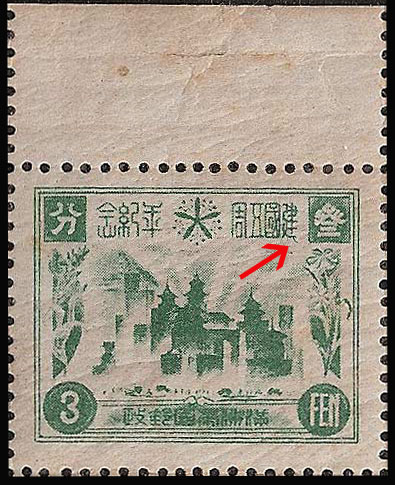
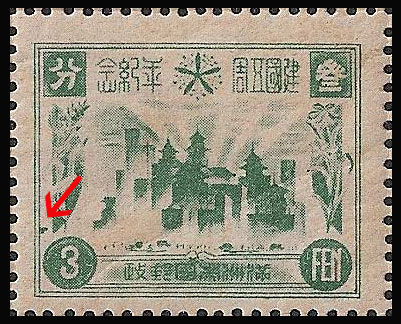
Hook & Dot Varieties - Click on images to enlarge. |
||||||
| Zirkle and Akagi both mention a hook on the "Chien" character at the top of the 2nd stamp on the sheet of 70 3f stamps. Akagi also mentions a variety associated with the 53rd stamp, a dot just inside the margin see above. To see a full sheet click here (3Mb). | ||||||
 |
||||||
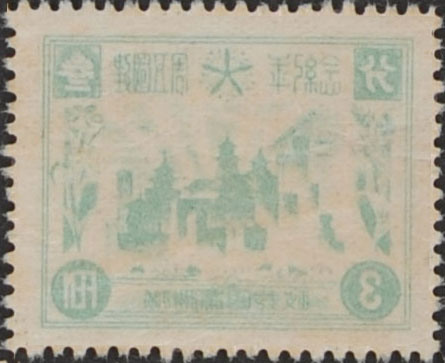
| 3 fen Mirror Offset | ||||||
|
|
||||||
|
Postal Rates - From 1 April 1937 to 1st March 1942 Rate changed to coincide with changes in Japan, keeping both rates in harmony. This was an important re-pricing and most prices increased at this time. |
||||||
|
|
||||||
|
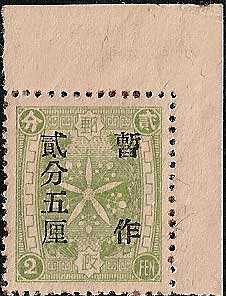
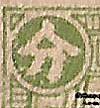
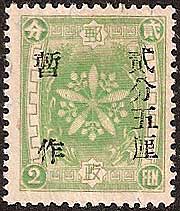
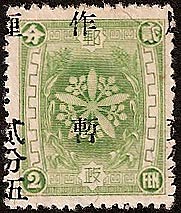
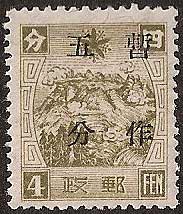
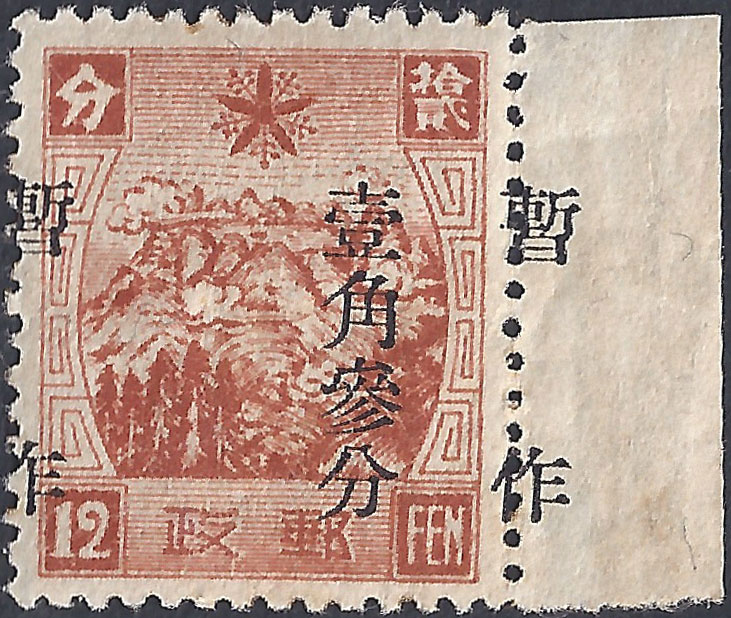
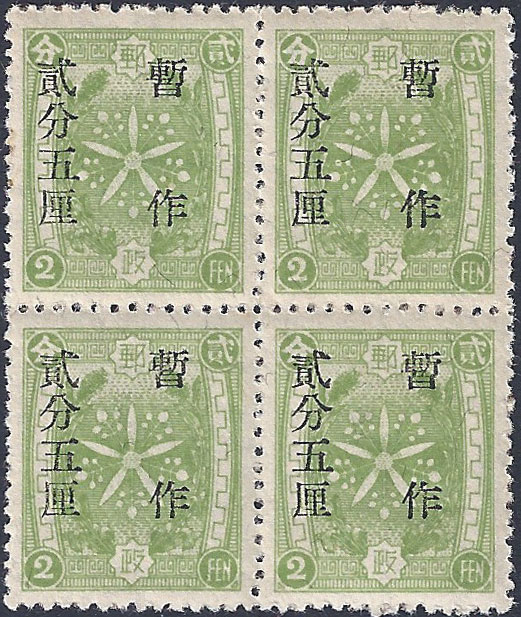
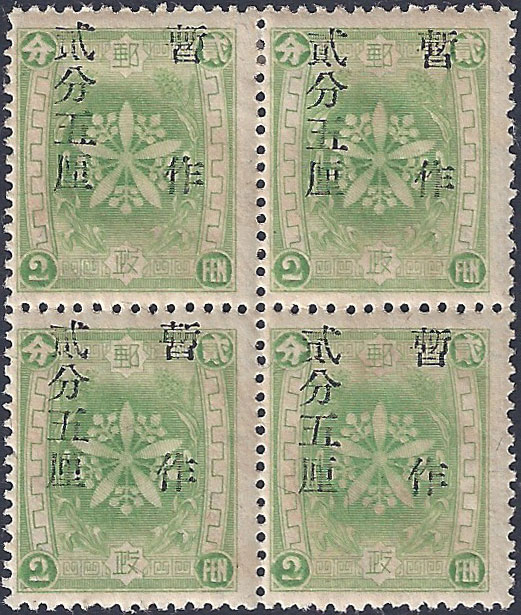
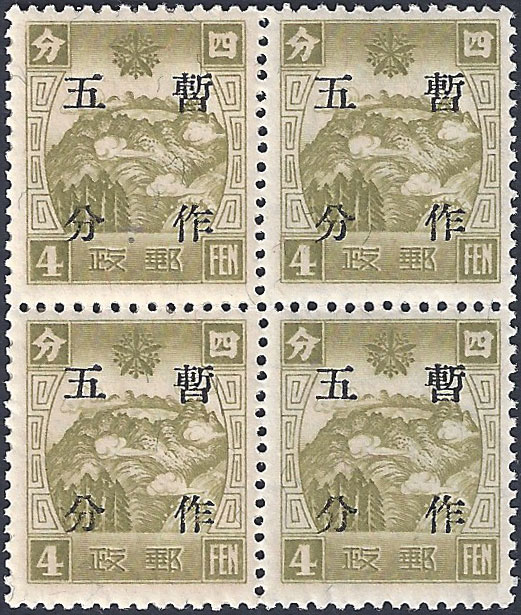
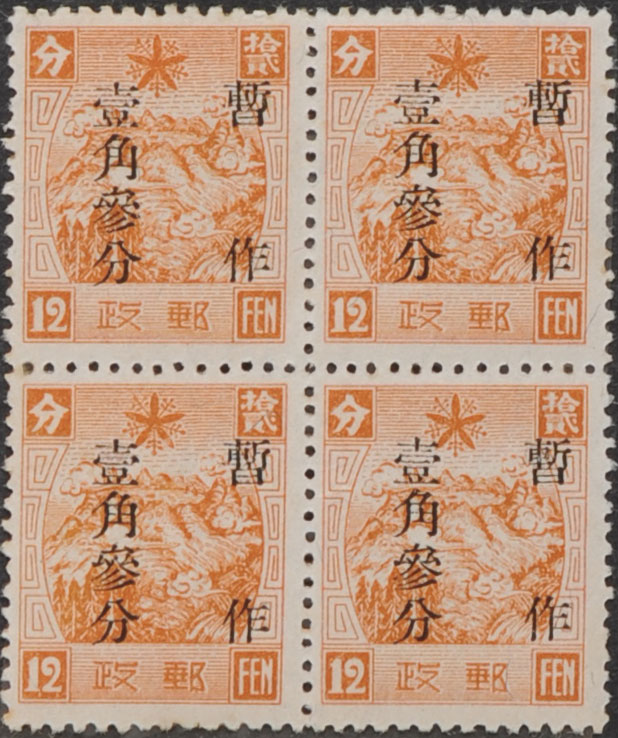
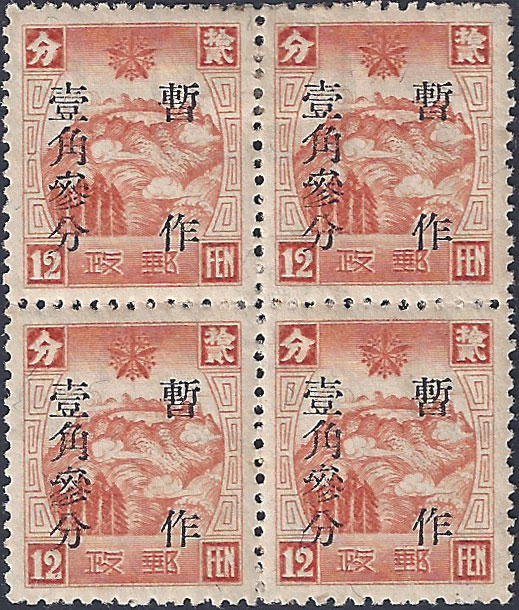
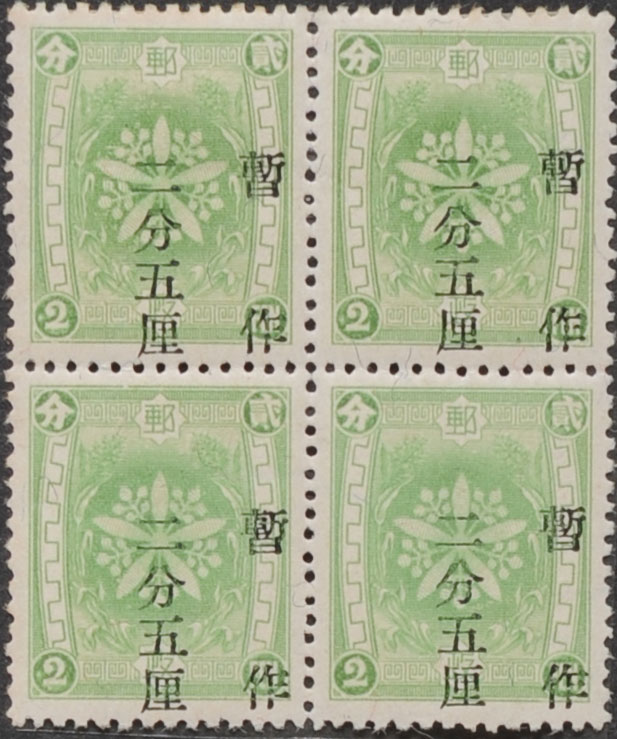
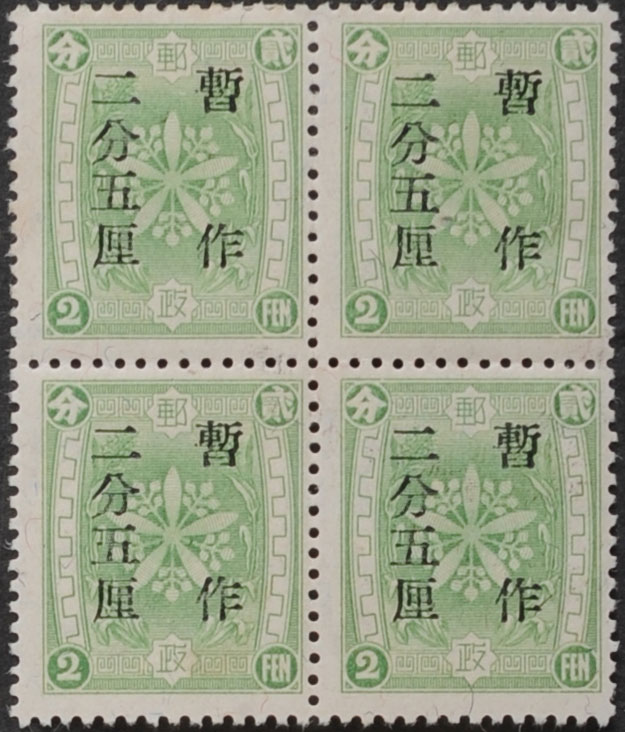
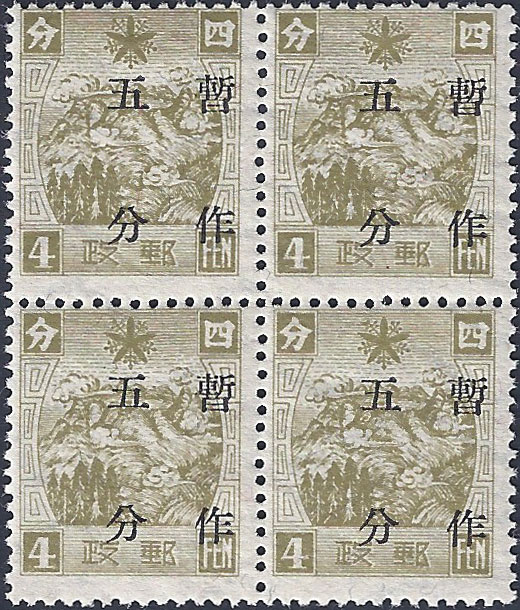
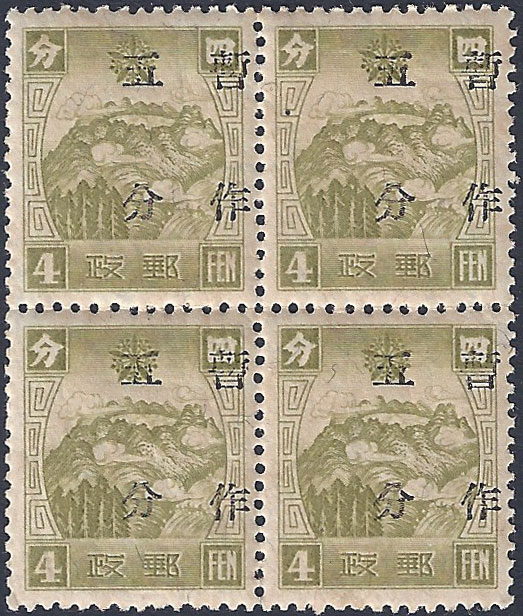
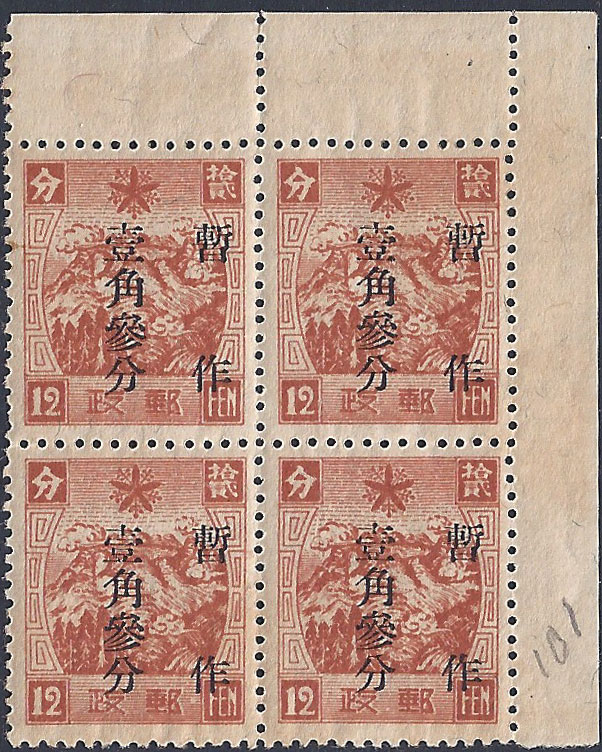
Surcharges to China Mail Issues The change in postal rates introduced on 1st April 1937 encouraged the authorities to use up all the old stock of China Mail stamps. Later in 1937 the Post Office issued new set of China Mail stamps in keeping with the new pricing. To clear existing stock they simply overprinted the new April price increase value on the stamps that remained unsold. The overprint by the Manchukuo Postal Administration Office, Hsinking, issued on 1st April 1937, consisted of four or six characters, the vertical spacing of the first batch (and most numerous) was 6.5mm but later this was changed to a narrower 4.5mm spacing. This change was made to make it easier to make sure all characters appeared on each stamp as there had been registration issues with previous print runs.
|
||||||
 |
||||||
| 2½ f on 2f (2nd China Mail Issue) 2½f on 2f (3rd China Mail Issue) | ||||||
| characters watermark - narrow petal characters watermark - wide petal | ||||||
 |
||||||
| 5f on 4f (3rd China Mail Issue) | ||||||
| characters watermark - litho | ||||||
 |
||||||
| 13f on 12f (2nd China Mail Issue) 13f on 12f (3rd China Mail Issue) | ||||||
| characters watermark - engraved characters watermark - litho | ||||||
| Varieties | ||||||
Overprint on "Open" Fen Variety. The two legs of the fen character are normally joined at the base. This occurs on stamp 10 (Top right hand corner) of each sheet of the Second China Mail Issue.
Surcharges transposed and misplaced. Narrow Setting 4.5mm. Issued 12th April 1937
|
||||||
 |
||||||
| 2½ f on 2f (3rd China MailIssue) Yellow Green 2½ f on 2f (3rd China Mail Issue) Green | ||||||
| characters watermark - wide petal characters watermark - wide petal | ||||||
 |
||||||
| 5f on 4f (1st China Mail Issue) 5f on 4f (3rd China Mail Issue) | ||||||
| wavy lines watermark - engraved characters watermark - litho | ||||||
 |
||||||
| 13f on 12f (2nd China Mail Issue) | ||||||
| characters watermark - engraved | ||||||
| Varieties | ||||||
 |
||||||
| Inverted Surcharge | ||||||
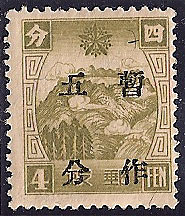 |
||||||
|
Broken top stroke of the Five Character - stamp 78 of some or all sheets. |
||||||
|
|
||||||
|
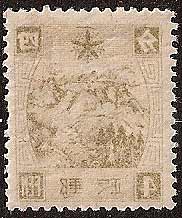
Mirror Offset - Above is a mirror offset (print on gum) error on the 5f overprint on a First Issue China Mail 4f. It is said that only one sheet of these exists, probably due to a lack of interleaving or drying when printing. |
||||||
|
|
||||||
|
Surcharge Shifted 50% |
||||||
| Confused by the various China Mail issues? - Click Here | ||||||
|
|
||||||
|
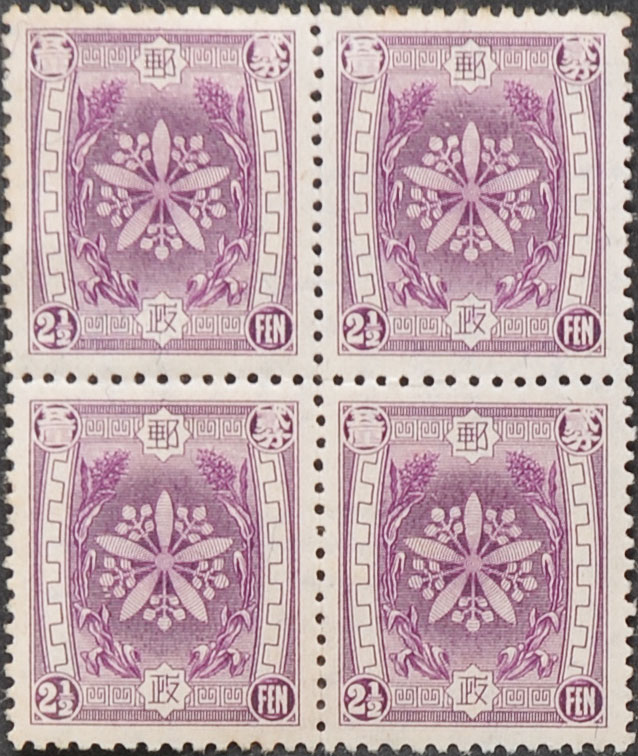
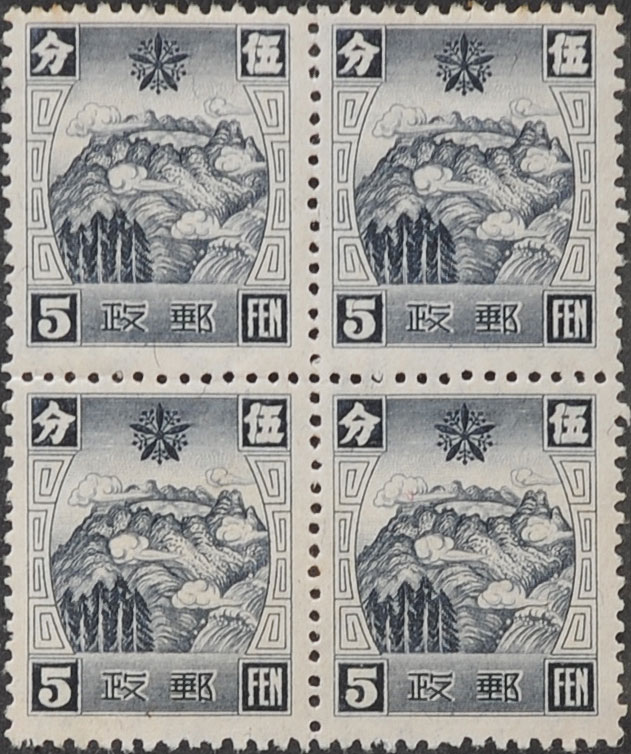
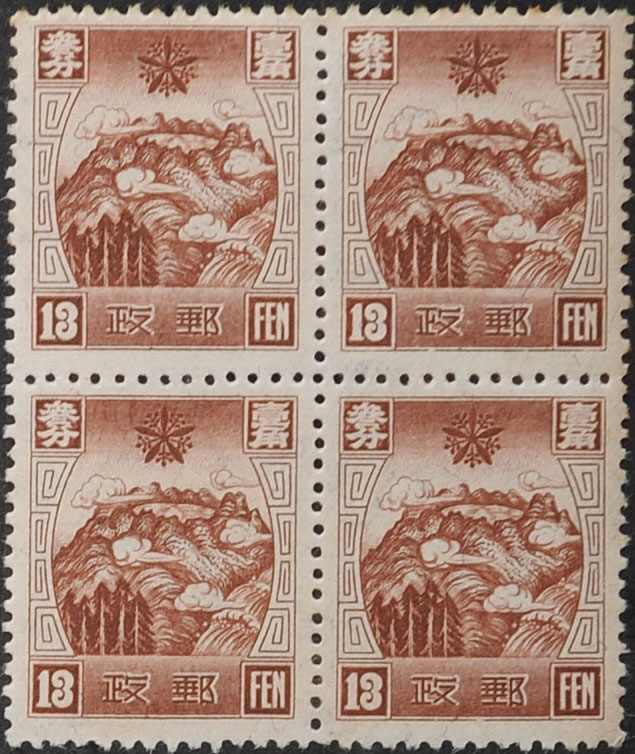
Special China Mail Stamps (Fourth Issue) Although China had accepted the use of stamps bearing the name Manchukuo, it was decided to produce a further issue of China mail stamps in line with the 1st April increases to postal prices. This gave rise to the fourth issue of China Mail stamps with new values. Many proofs are known for this issue, including a 5f in magenta. Plate flaws exist for the 13f the most common being a spots in the bottom right hand panel containing the word" FEN", these are inconsistent and should not be mistaken for a variety. Any stamps or sheets you may see for this issue marked "SPECIMEN"are fakes. The stamps are 18.5mm x 22mm, Perf 13 x 13½. Produced in April 1937. The stamps were recess printed by the Manchukuo Postal Administration Office, Hsinking.
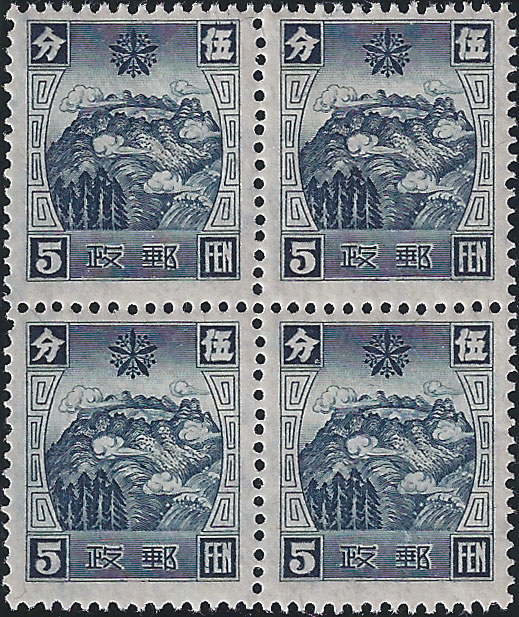
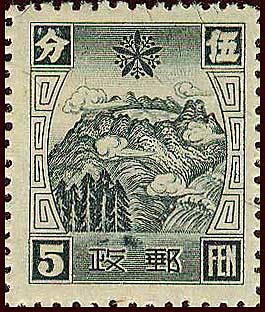
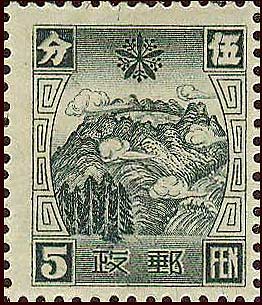
The set consisted of 3 stamps, a 2½f featuring the Imperial Crest of Manchukuo and 5f and 13f showing 長白山Zhǎngbáishān (Mount Changbai) and the Heavenly Lake.
|
||||||
|
|
||||||
 |
||||||
| Variety - 5f Slate Blue - A few sheets were printed in this colour. | ||||||
|
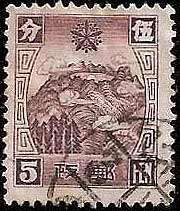
The 5f Changeling |
||||||
 |
||||||
| Mentioned by Akagi and Zirkle, this colour represents a chemical changeling made to deceive collectors. It is not a genuine variety. To read more about this stamp click here. | ||||||
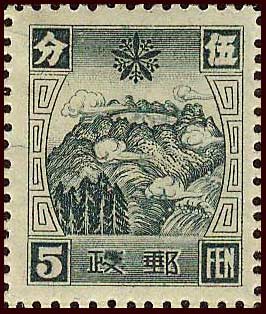
| The 5f Smudge | ||||||
 |
 |
 |
||||
 |
 |
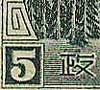 |
||||
|
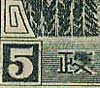
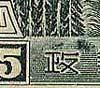
Above is an example of a transient
printing flaw which was reported by Major Elbridge Colby in the
China Clipper (Vol. III #4 page 47). The cause is thought to be
foreign matter adhering to the plate (stamp 90) and moving slightly with each
printing until it finally dissolved. It is unusual for a flaw to be
taken seriously by collectors but this example was mentioned by both
Akagi and Zirkle. Images courtesy of Travis Searls |
||||||
| Confused by the various China Mail issues - Click Here | ||||||
|
|
||||||
|
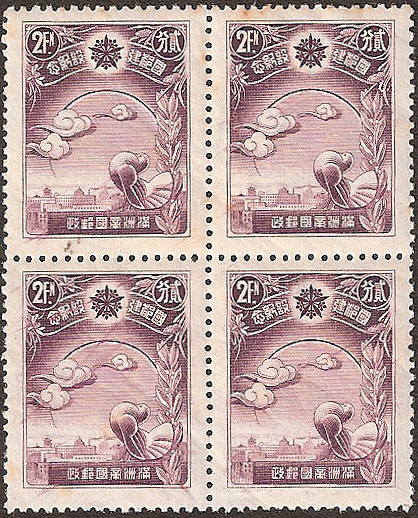
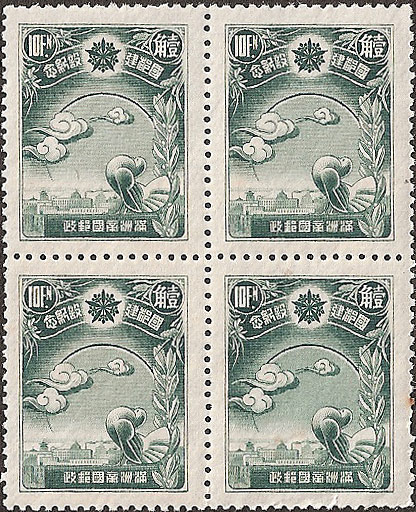
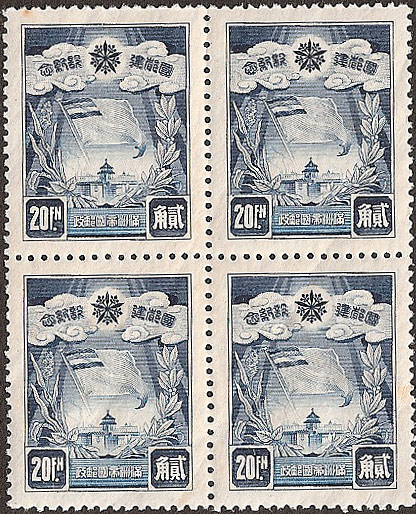
Completion of the Five Year Plan for Re-building of the Capital This set of four stamps was issued on 16th September 1937 to commemorate the completion of the first 5 year plan aimed at re-building of the capital, Hsinking. This involved an important ceremony attended by the Emperor Kāngdé himself. Interestingly the designs for these stamps were chosen as a result of a contest The winning designs were submitted by Mr Ishikawa Kosuke of Tokyo. The Japanese had put in place a five year plan to develop Hsinking (formerly Changchun, the name was changed on 1st November 1932) into a modern state capital city. Prior to this the population of Changchun had remained steady at around 130,000 and the old Chinese city covered an area of about 21 square kilometres. The expansion plan, managed by the Capital Construction Bureau, saw an increase in the population to 350,000 with the city covering 200 square kilometres by the end of the first 5 years work. The result was a modern city with fine infrastructure, communication, water, drainage and electricity for a total expenditure of 38,667,000 yuan. . A commemorative cancel was produced (see below) and a special set of three picture postcards appeared for sale though Post Offices, these can be seen here.
Capital Construction Bureau. The stamps are 21.5mm x 27mm, Perf 12 x 12½. Engraved on un-watermarked "granite" paper by the Manchukuo Government Supplies Division, Hsinking. Proofs of the 20f have been found, in colour, on thick paper with no gum. 2f and 10f design
shows A pouter pigeon overlooking Hsinking.
|
||||||
|
|
||||||
|
285,000 1,400,000
|
||||||
|
|
||||||
|
189,000 84,000
|
||||||
|
|
||||||
|
Zirkle
34
- Issued 16-18th
September 1937. Construction of the Capital City. The Capital Construction Bureau declared it had completed the task of rebuilding 新京 Hsinking on 16th September 1937 and this cancel was issued in honour of that occasion. |
||||||
|
|
||||||
|
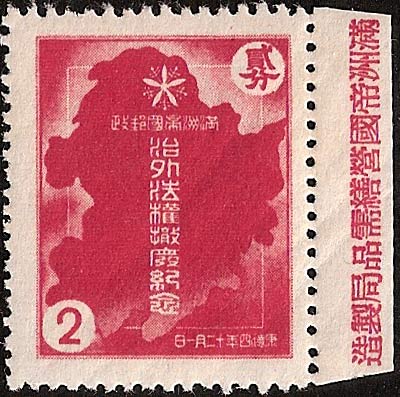
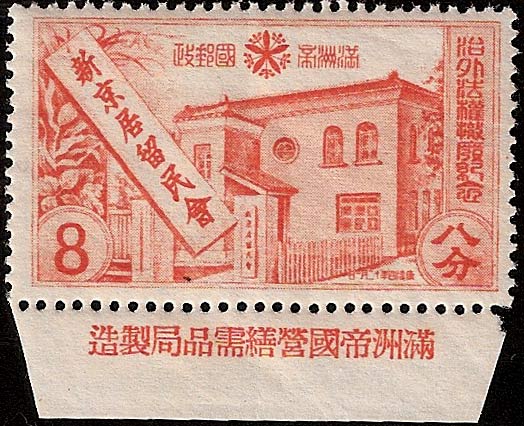
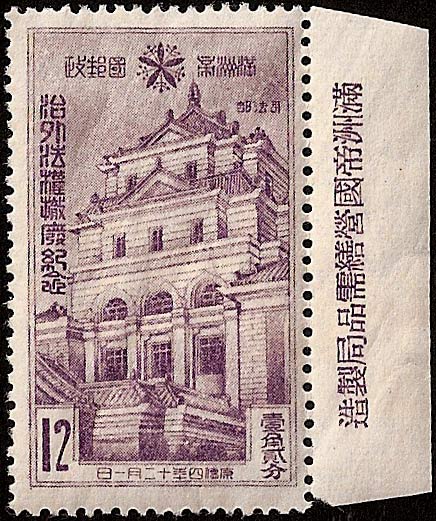
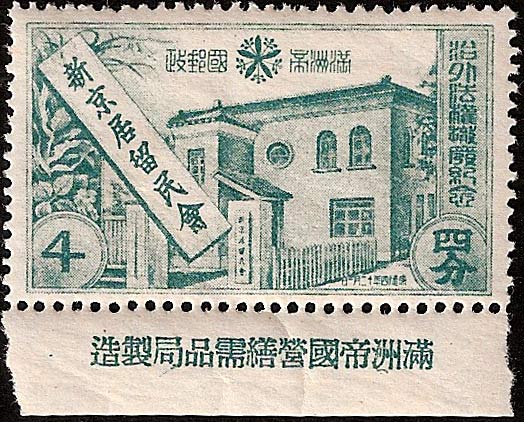
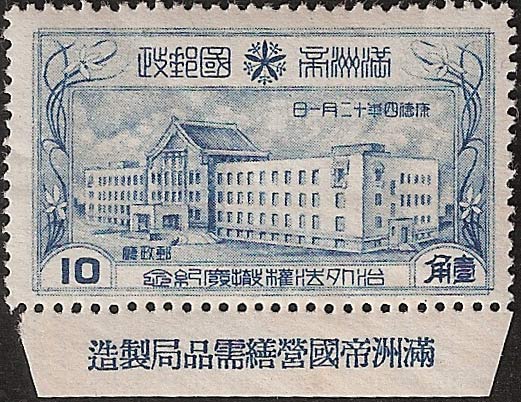
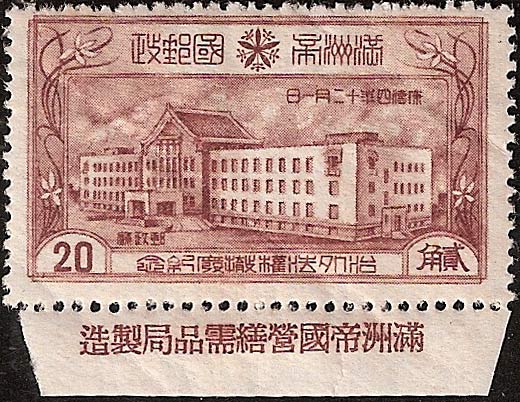
The Abolition of Extra Territorial Rights 1st December 1937. This series starting with a map of Manchukuo commemorates Japan’s relinquishment of Japanese civilian extraterritorial rights over Manchukuo. On 1st December 1937 a treaty was signed by Ambassador General Uyeda of Japan and Foreign Minister Chang of Manchukuo. This meant that control of various civil government functions such as policing, education, control of industrial production, postal services, taxation, the judicial system etc, passed from Japanese control to become the sole responsibility of the Government of Manchukuo. This included the South Manchurian Railway Zone where Japanese citizens became subject, for the first time, to the laws of Manchukuo. Needless to say, Japan retained control of all things military, and the Emperor Kāngdé. A commemorative cancel (see below) and a special set of three picture postcards appeared for sale though Post Offices, these can be seen here. This is a six stamp set litho printed on un-watermarked "granite" paper by the Manchukuo Postal Administration Office, Hsinking. Designs by Mr Hirozo Oya. This set is an odd mixture of designs, sizes, styles and perforations, so details of each are shown below by value. Note - copies of the 2f exist that are offset printed, the printing appears sharper and more legible.
Department of Justice Building, Hsinking. 2f design a
Map of Manchukuo with vertical text reading "Commemorating Abolition
of Extraterritoriality 21.5mm x 27mm, sheets of 70, Perf 12 ½.
|
||||||
|
|
 |
|||||
|
3,000,000 |
1,400,000 |
|||||
|
|
 |
|||||
|
200,000 |
500,000 |
|||||
|
|
 |
|||||
|
200,000 |
200,000 |
|||||
|
Zirkle
37
- Issued 1 - 3rd
December 1937. 治外法权 (Extraterritoriality) 撤废 (Abolishment) 纪念 (Commemorate) This cancel shows the symbolic five bats ("wu fu", the five blessings - health, wealth, long life, love of virtue and a peaceful death) circling a torch, and is to commemorate the abolition of extraterritorial rights. |
||||||
|
|
||||||
|
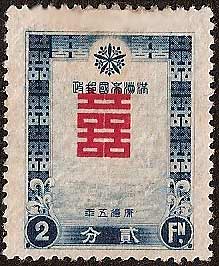
Special Issue for New Years Greetings A single stamp issued on 15th December 1937 and intended for use on New Year's greetings cards featuring the character "Hsuan Hsi" Double Happiness. The post office featured a New Year promotion, all letters bearing this stamp could travel for half price between 15th and 30th December 1937, hence the 2f value, the post office ran this offer between 20th and 30th December 1936 and it was so successful that they decided to repeat it, this time with a special stamp. Special handling instructions for New Year's mail date from 1934 and details can be found here. The stamps were printed using recess printing for the blue frame and lithograph printing for the red central character. It is thought that two thicknesses of paper may exist for this issue, the thinner of which allows the central red character to show though, the thicker being more opaque. Dark sage green proofs are known to exist of the plate used to print the blue main colour. The stamps were printed on un-watermarked white paper in sheets of 100 by the Manchukuo Postal Administration Office, Hsinking. Design by Mr Hirozo Oya. This stamp is 21.5mm x 27.5mm. Perf 12 ½. 2f design
a blue background with a red character "囍
|
||||||
|
|
||||||
|
20,000,000 |
||||||
|
Error, Examples
of Red
囍
|
||||||